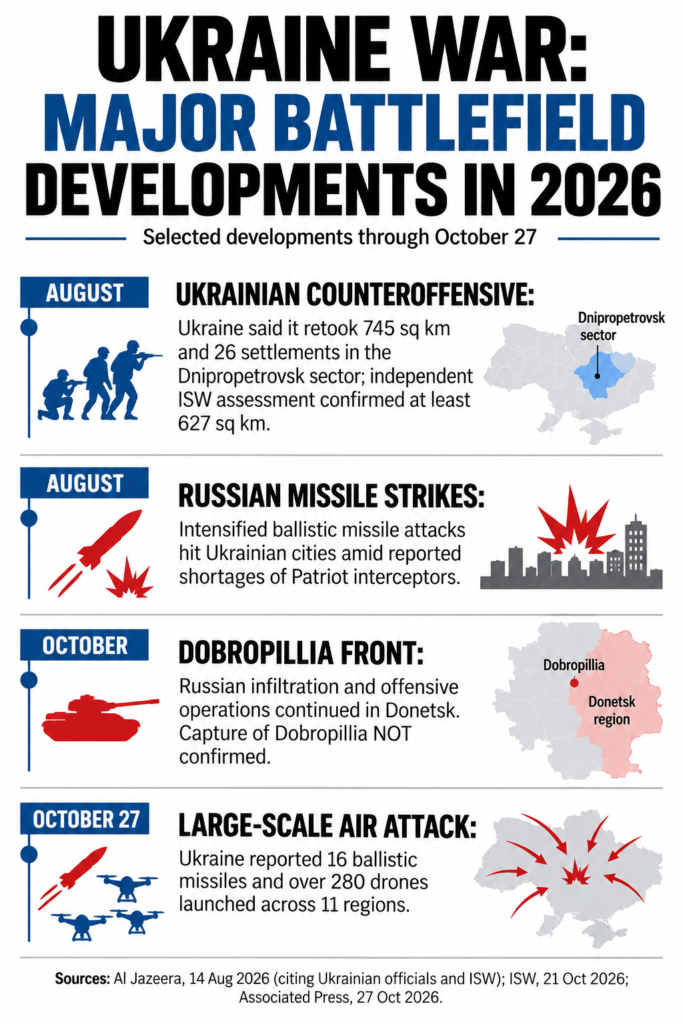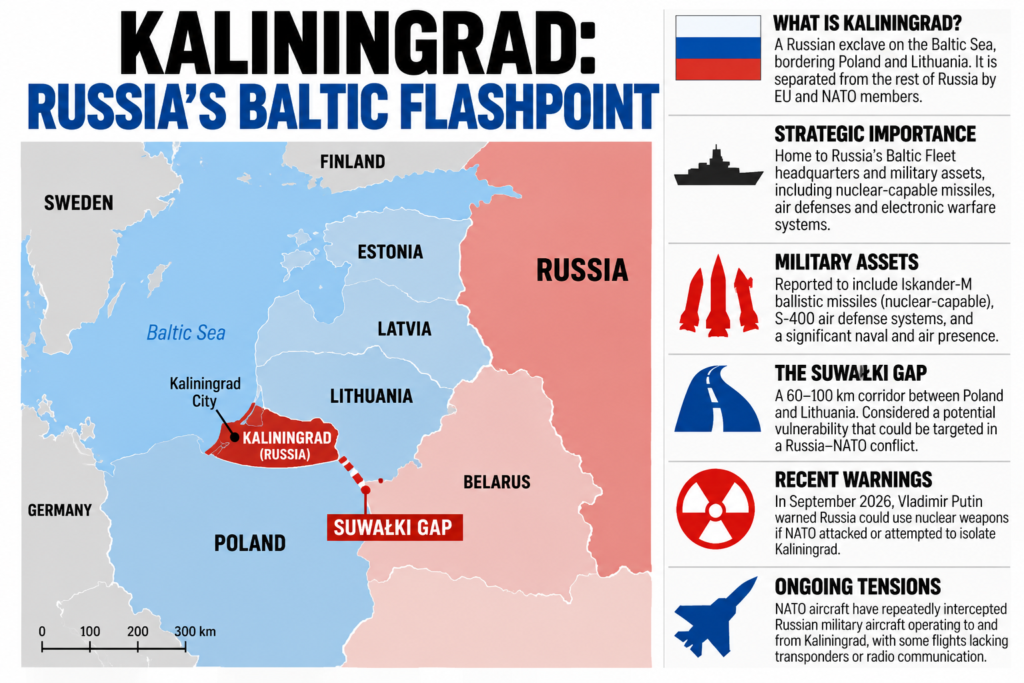





Germany is prosecuting a former member of the Ukrainian armed forces over the sabotage of the Nord Stream natural gas pipelines, despite attempts to have the case dismissed, in a move that could bring conflict between the two allies.
The National Pulse gives you deep dives into the issues that matter. To help support Raheem J. Kassam and his team continue this work, please JOIN THE NATIONAL PULSE or MAKE A DONATION today. We are 100% reader-funded.
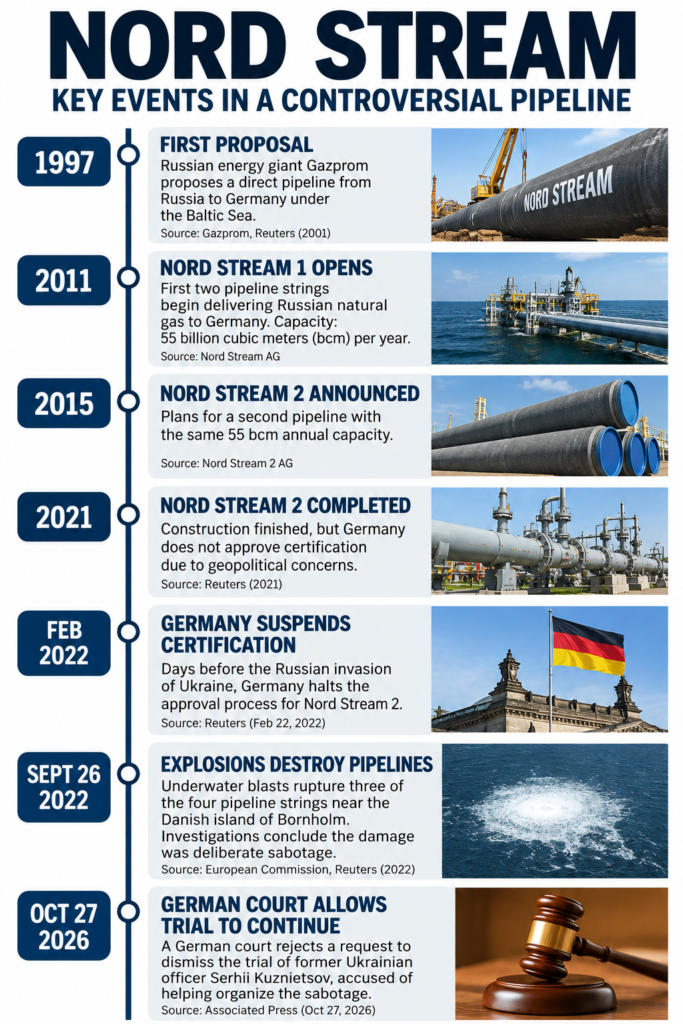
A German court on October 27 rejected an attempt by lawyers representing Serhii Kuznietsov to halt proceedings over his alleged involvement in the September 2022 sabotage of the pipelines, which connected Russia directly to Germany via the Baltic Sea.
Kuznietsov’s defense argued that Ukrainian military secrecy obligations prevented him from adequately defending himself. The court rejected the argument, allowing the case to proceed. German prosecutors allege that Kuznietsov helped organize a team responsible for planting explosives on the pipelines near the Danish island of Bornholm. He has not been convicted, and the government of Ukraine has repeatedly denied state involvement in the attack.
The proceedings raise an uncomfortable question for the German government and its people: if the German courts determine that the Ukrainian state was behind the attack on one of its greatest European supporters, how should Germans react?
Who is Really Behind the Destruction of Nord Stream?
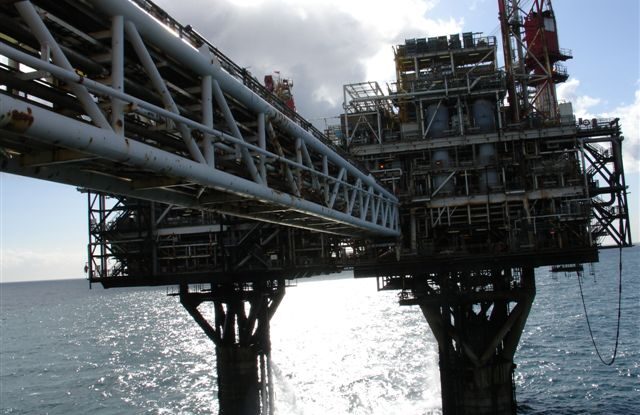
On September 26, 2022, underwater explosions ruptured three of the four strings comprising the Nord Stream 1 and Nord Stream 2 pipelines. The blasts occurred in the Baltic Sea near Bornholm, with European investigators subsequently concluding that the damage resulted from deliberate sabotage.
German investigators developed a theory involving a small team of divers operating from a rented sailing yacht, reportedly named Andromeda, which allegedly transported explosives and diving equipment to the Baltic Sea.
A Washington Post investigation published in June 2023 revealed that American intelligence had received information about a Ukrainian plan to attack the pipelines months before the explosions. The report described intelligence concerning a proposed operation involving a small team of divers linked to Ukraine’s military establishment.
More recent reporting has raised further questions about Kuznietsov’s military status, including testimony reportedly indicating that he remained part of active duty military in Ukraine at the time of the sabotage itself. This raises the distinct possibility that it was not a rogue group of servicemen but a coordinated state-sponsored act of international sabotage.
Germany’s Cheap Energy Lifeline.
The original Nord Stream pipeline began delivering Russian natural gas to Germany in 2011, providing a direct route across the Baltic Sea that bypassed traditional transit countries, including Ukraine and Poland. Nord Stream 2 was completed in 2021, but Germany suspended its certification in February 2022, shortly before Russia launched its full-scale invasion of Ukraine.
Germany had long relied on cheap Russian natural gas, which became vital to the country’s energy-intensive industries, including chemicals, fertilizers, and manufacturing. The destruction of the pipelines permanently damaged a major potential route for restoring cheap Russian gas deliveries in the future, forcing Germany to reorient its energy strategy at a high cost.
Germany’s subsequent energy crisis was driven by multiple factors, including the collapse of Russian gas supplies, elevated wholesale prices, and the costs of replacing pipeline gas with alternative sources. The economic consequences extended beyond household energy bills. German industrial competitiveness came under pressure as businesses confronted higher energy costs, while Berlin accelerated construction of liquefied natural gas import facilities. Combined with net-zero policies and the Green Agenda, Germany has seen a wave of deindustrialization and corporate bankruptcies since 2022.
What Did Poland’s Current Foreign Minister Know?
On September 27, 2022, Radosław Sikorski, a former Polish foreign minister who has since returned to that office, published a photograph of the Baltic Sea gas leak alongside the words “Thank you, USA.” The now-deleted post immediately generated controversy because it appeared to suggest American responsibility for the explosions.
Sikorski later attempted to walk back his remarks, calling them speculation rather than evidence of American involvement. While Poland had opposed Nord Stream for years, arguing that the pipelines strengthened Moscow’s geopolitical influence while undermining the energy security of Eastern European countries, it remains unclear if Sikorski knew who was actually behind the attack.
Ukraine’s History of Overseas Attacks and Assassinations.
The Nord Stream allegations are not the first time Ukrainian intelligence services have been linked to secretive attacks far beyond the borders of Ukraine.
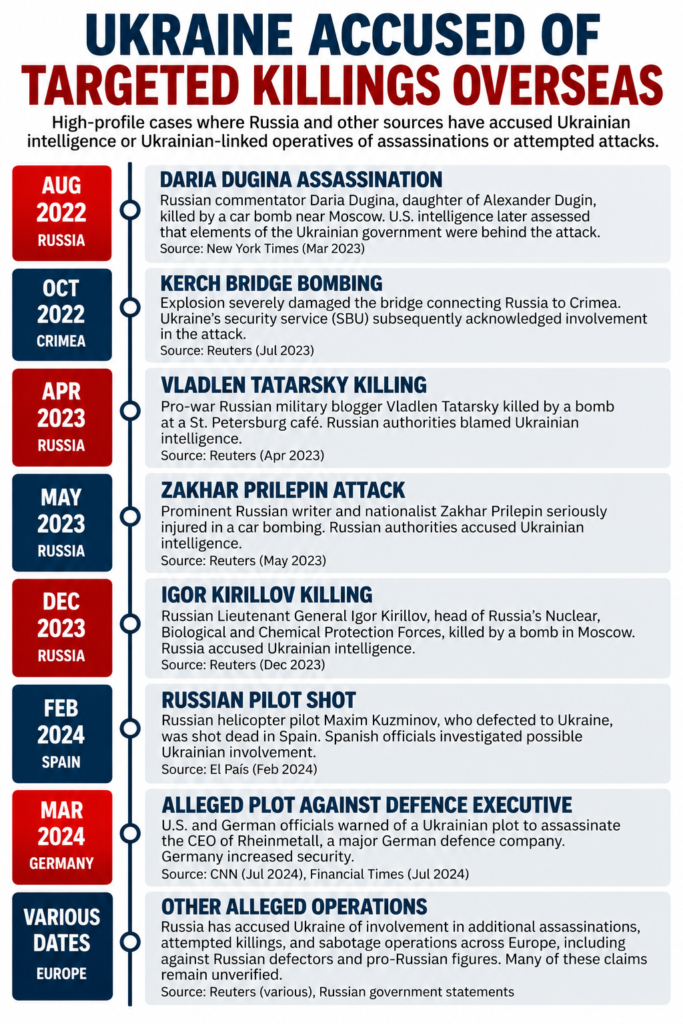
In August 2022, Russian political commentator Daria Dugina, daughter of nationalist philosopher Alexander Dugin, was killed when a bomb exploded beneath her vehicle outside Moscow. Although Kiev denied responsibility, American intelligence officials subsequently assessed that elements of the Ukrainian government had authorized the assassination.
A major Washington Post investigation published in October 2023 examined Ukrainian intelligence operations inside Russia, including targeted killings and attacks on infrastructure. The report linked Ukrainian security services to the Dugina assassination and other covert activities, citing Ukrainian and Western intelligence sources.
Another high-profile attack occurred in April 2023, when Russian military blogger Vladlen Tatarsky was killed by a bomb at a St. Petersburg café. Dozens of other people were injured. Russian authorities blamed Ukrainian intelligence for the bombing, an accusation Kiev denied. Responsibility for the attack remains disputed.
Moscow has repeatedly accused Ukrainian intelligence of involvement in additional assassinations, bombings, and attempted sabotage operations. This includes the 2024 Crocus City Hall attack, which saw alleged Islamist terrorists kill 145 people, one of the worst terrorist attacks on Russian soil ever. Russia claimed the terrorists were aided by Ukraine, though the Islamic State terrorist group took responsibility officially.
The Nord Stream Bombing Could Be a War Crime.
The Hamburg case could also establish an important precedent concerning the limits of wartime sabotage. Kuznietsov faces charges including causing an explosion, property damage, disrupting public services, and complicity in war crimes arising from an alleged attack on civilian infrastructure.
The defense has questioned whether Nord Stream should be considered a legitimate military target because of its economic importance to Russia. Under international law, civilian infrastructure is generally protected from deliberate attack unless it qualifies as a military objective. A target’s economic importance to a country engaged in war does not, by itself, establish that it may lawfully be attacked.
The fact that Nord Stream was built primarily to transport natural gas to civilian and industrial consumers largely shows that it was not being used for any kind of direct war purpose. Even if the attack served a military purpose, that would not automatically exempt its participants from prosecution under German domestic laws.
A Trial That Could Split Germany and Ukraine.
German prosecutors have alleged that the suspected saboteurs were acting on behalf of Ukrainian state authorities. If this proves true, it could enrage a German public that has been told that Ukraine is their ally for years and strengthen support for the populist Alternative for Germany (AfD), the party most skeptical of Ukraine and its leadership.
The current allegations go beyond the suggestion that a handful of Ukrainian nationals independently decided to destroy the pipelines.
Furthermore, statements from two former Ukrainian military superiors placed Kuznietsov under direct military command during the period of the explosions. One of the officers, Roman Chervinsky, reportedly argued that Nord Stream represented a legitimate target because of its financial importance to Russia.
While his testimony does not establish who authorized the attack, it raises the possibility that the operation involved an official military chain of command.
For German Chancellor Friedrich Merz, the political implications are potentially catastrophic. Germany remains a major supplier of military and financial assistance to Ukraine. A conviction implicating Ukrainian military personnel could destroy what’s left of his popularity and credibility in Germany, as he has been one of the most vocal supporters of the Zelensky regime.
A guilty verdict could also generate demands for compensation, diplomatic explanations, and a wider investigation into whether senior Ukrainian officials approved the operation.
However, a conviction may not necessarily bring German military assistance to an end. Berlin could choose to pursue criminal accountability while maintaining its broader commitment to Ukraine’s defense.
The deeper political question is whether the German public would accept such a distinction if evidence emerged that Ukrainian state authorities had deliberately destroyed infrastructure connected to Germany’s own economy.
An Uncertain Future.
Four years after the explosions, the German trial over the Nord Stream sabotage could finally provide a judicial account of an operation that has generated years of competing accusations, intelligence leaks, and diplomatic speculation.
It could also expose a fundamental contradiction: Germany is prosecuting an alleged Ukrainian military operative over the destruction of infrastructure it helped finance, while continuing to provide immense assistance to Ukraine.
If the proceedings establish that the sabotage was authorized through Ukraine’s military command structure, Berlin may face a difficult choice between demanding accountability and preserving its strategic relationship with Kiev and the Zelensky government.
The question is no longer simply who destroyed Nord Stream. It is whether Germany is prepared to confront an ally if its own courts establish that the attack was carried out with the approval of Ukraine.
To help Raheem J. Kassam and his team give you the details and analysis behind the stories making the headlines, please JOIN THE NATIONAL PULSE or MAKE A DONATION today.
Join Pulse+ to comment below, and receive exclusive e-mail analyses.