Florida sets a national precedent by restricting taxpayer-funded welfare benefits from being used on luxury and non-essential items, aiming to ensure accountability and proper support for low-income families.
PULSE POINTS
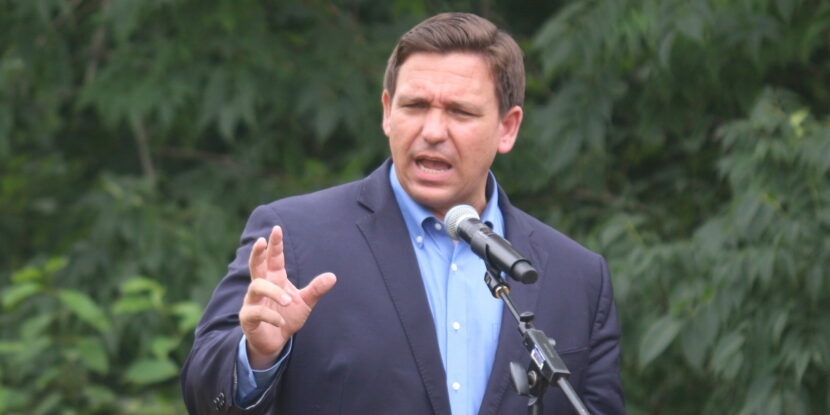
❓ WHAT HAPPENED:Floridahas become the first state in America to restrict Temporary Cash Assistance (TCA) benefits from being used to purchase tattoos, vaping products, pornography, and other non-essential goodsand services. Governor Ron DeSantis(R) announced on August 24 that the state will amend its Temporary Assistance for Needy Families plan governing cash aid distributed through EBT cards.
📺 DETAIL: Under the new rules, recipients will be prohibited from using TCA funds for tobacco, nicotine products, vaping products, drugs, pornography, video games, entertainment tickets, theme park admissions, tattoos, spa services, tanning, and psychic services. Florida already prohibits EBT cards from being used to purchase alcohol or make payments at adult-entertainment venues, casinos, and commercial bingo halls. DeSantis said taxpayer-funded assistance should help families afford necessities such as food, utilities, and clothing while helping recipients move toward independence. The changes will align TCA restrictions with Florida’s recent SNAP limits on soda, energy drinks, candy, and ultra-processed desserts. The state will implement the new restrictions in phases, beginning with SNAP-authorized retailers before expanding transaction-level controls. Federal officials said they hope other states will follow Florida’s example, with Administration for Children and Families Assistant Secretary Alex Adams calling the approach a potential “best practice.”
💬 KEY QUOTE: “Taxpayer-funded assistance should help families put food on the table, keep the lights on, purchase clothing, provide for their children, and overcome barriers on the path toward independence.” – Ron DeSantis
🎯 IMPACT: The policy could strengthen Florida’s push to increase oversight of taxpayer-funded assistancewhile sparking a broader national debate over how welfare benefits should be regulated. If other states adopt similar restrictions, the move could reshape welfare policy by placing greater emphasis on directing public assistance toward basic necessities and away from discretionary spending on luxuries.
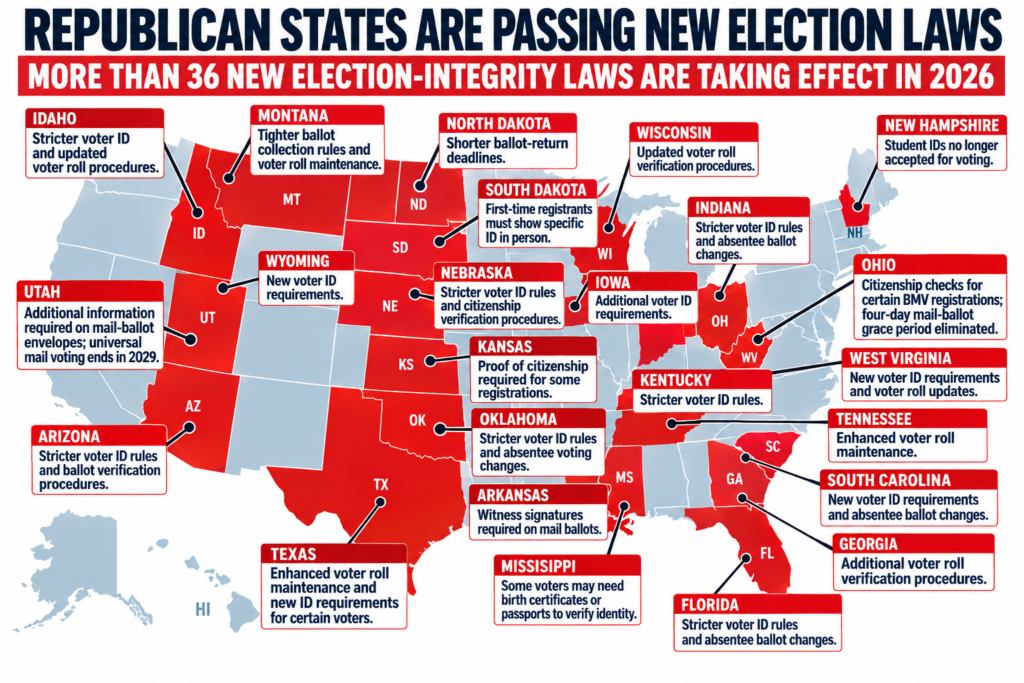
Republican-controlled states are implementing dozens of new election-integrity measures ahead of the November midterms, advancing key elements of President Donald J. Trump’s agenda even as Democrats in Congress and the federal courts have stifled his attempts to introduce similar requirements on the federal level.
The National Pulse is dedicated to bringing the analysis and news important to you. To support Raheem J. Kassam and his team in their work, please JOIN THE NATIONAL PULSE or MAKE A DONATION today. We are 100% reader-funded.
Newsletter
Need to Know.
Your free, daily feed from The National Pulse.
Thank You!
You are now subscribed to our newsletter.
More than three dozen new voting laws are taking effect for the first time this year in red states, according to an Associated Press investigation published Monday. The legislation includes tougher voter identification requirements, proof of American citizenship, stricter mail-in ballot deadlines, and new procedures for maintaining voter rolls. The new laws are a significant victory for the broader Republican election-integrity agenda, demonstrating how conservative state legislatures can advance policies at the state level.
The Campaign Against Federal Reforms.
President Trump has made election integrity a major objective of his second term, supporting legislation that would require proof of citizenship for federal voter registration and seeking greater federal oversight of voter eligibility. However, resistance from Democrats and various court decisions have prevented several major initiatives from taking effect before November.
The Republican-backed Safeguard American Voter Eligibility (SAVE) Act, which would establish additional citizenship-verification requirements for federal elections, has encountered obstacles in Congress despite Trump repeatedly trying to push the legislation through ahead of the midterms.
Trump has also attempted to implement reforms through executive means. His administration’s March 2026 executive order looked to strengthen citizenship verification using federal databases and introduce additional safeguards for mail voting. Federal judges, however, have challenged the administration’s authority to impose nationwide election procedures without congressional authorization.
Republican-controlled states have taken matters into their own hands, ranging from stricter identification standards to restrictions on absentee voting. In New Hampshire, student identification cards are no longer accepted as valid voter identification. Republican state Rep. Donald McFarlane, who sponsored the measure, argued that colleges do not necessarily maintain the same identification standards as government agencies.
“The change removes a special exception and applies the same government-issued ID standard to all voters,” McFarlane explained, noting that the legislation received bipartisan support and that students can obtain state identification cards free of charge.
Mississippi has implemented citizenship-verification requirements under which certain prospective voters may need to produce passports, birth certificates, or comparable documents when their citizenship cannot otherwise be confirmed.
South Dakota has introduced stricter registration procedures requiring first-time registrants to present specified identification documents in person. The American Civil Liberties Union (ACLU) has challenged the measure, arguing that it could create significant difficulties for rural residents who must travel considerable distances to register.
Meanwhile, Utah has tightened its mail-ballot procedures, requiring additional identifying information on ballot envelopes. A separate state law is also set to end universal mail voting beginning in 2029.
Ohio has introduced citizenship-verification requirements for certain individuals registering or updating their registration through the state’s Bureau of Motor Vehicles. The state has additionally eliminated the four-day grace period previously afforded to mail-in ballots, meaning ballots must now arrive at election offices by Election Day rather than merely being postmarked by that date.
Other Republican-led states have adopted comparable measures. According to the Brennan Center for Justice’s October 2026 review, Arkansas now requires witness signatures on mail ballots, while North Dakota has tightened ballot-return deadlines.
The organization identified 47 laws it classified as restrictive enacted across 22 states between the 2024 election and September 2026, with 38 laws and part of another scheduled to take effect for the midterms. Not every provision has survived legal scrutiny, and some remain subject to ongoing litigation. The overall effect is a substantial change in election procedures across numerous states.
The Battle Over Verifying Citizenship.
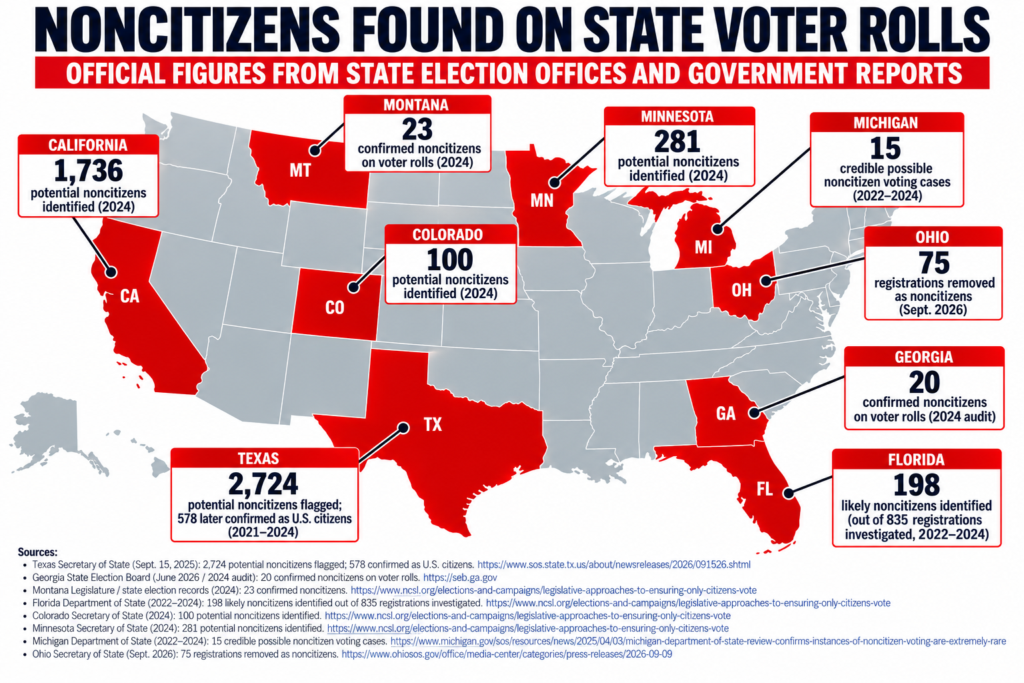
Federal law already prohibits noncitizens from voting in federal elections. However, existing registration procedures do not always prevent ineligible individuals from appearing on voter rolls. Noncitizens have repeatedly appeared on voter rolls in various states. In New Jersey alone, thousands of noncitizens were found on the state’s voter rolls earlier this year.
Ohio Republican state Sen. Theresa Gavarone defended her state’s new requirements, saying that hundreds of noncitizens had been removed from Ohio’s voter rolls during the preceding two years. “Every single vote cast by a noncitizen disenfranchises a lawful Ohio voter,” Gavarone said.
The Department of Justice (DOJ) has announced approximately 90 election-misconduct prosecutions, including around 50 cases involving allegations of noncitizen voting. Republican lawmakers maintain that verifying citizenship before registration is a reasonable precaution, rather than waiting for violations to be discovered after elections.
The Trump administration has pursued similar objectives federally, including efforts to compare state voter rolls against the government’s Systematic Alien Verification for Entitlements (SAVE) database. Those efforts suffered another setback on October 9, when U.S. District Judge Sparkle Sooknanan ruled against the Justice Department’s voter-roll verification initiative. The Biden-appointed judge ruled that the administration had exceeded its authority and raised concerns that inaccurate federal records could lead to eligible American citizens being incorrectly removed from registration lists.
The Midterms Test.
The midterm elections will provide an immediate test of the new laws, with Republicans attempting to defend their congressional majorities while Democrats seek to regain control of both the House and the Senate. The new procedures could affect how voters register, which identification documents they must produce, and whether absentee ballots arriving after Election Day are counted.
The legislative developments have already demonstrated that Republican-controlled states can implement significant portions of the president’s preferred election agenda without waiting for Congress to act. The constitutional division of election authority that has complicated Trump’s federal initiatives has simultaneously provided state lawmakers with an avenue for pursuing many of the same objectives.
For Republicans, the state-level campaign is an alternative to a Washington legislative process that has repeatedly frustrated the administration’s ambitions. The Republican-led overhaul of state election laws could also establish the framework for further reforms heading into the 2028 presidential election.
While the president’s national election-integrity agenda remains constrained by Congress and the courts, Republican lawmakers across the country are demonstrating that meaningful changes to America’s voting rules do not necessarily have to begin in Washington.
To help Raheem J. Kassam and his team keep delivering you RADICALLY INDEPENDENT news and analysis, please JOIN THE NATIONAL PULSE or MAKE A DONATION today.
Join Pulse+ to comment below, and receive exclusive e-mail analyses.
show less
Republican-controlled states are implementing dozens of new election-integrity measures ahead of the November midterms, advancing key elements of President Donald J. Trump's agenda even as Democrats in Congress and the federal courts have stifled his attempts to introduce similar requirements on the federal level.
show more
By Popular Demand.
The National Pulse Now has an on-site comments section for members. Sign up today and be part of the conversation in our community of almost 15,000.
WE ARE 100% INDEPENDENT AND READER-FUNDED. FOR A GUARANTEED AD-FREE EXPERIENCE AND TO SUPPORT REAL NEWS, PLEASE SIGN UP HERE, TODAY.
When far-left rioters tore Christopher Columbus’s statue from its pedestal in Baltimore on July 4, 2020, and dumped it in the harbor, it looked like a cultural turning point. The monument had stood for more than 30 years after the late President Reagan dedicated it in 1984. A mob toppled it on Independence Day, and left-wing officials in other cities seized the opportunity to erase similar monuments. Within a year, Joe Biden and Kamala Harris were in government, and the apparatus of state began treating Columbus Day as something else.
Protesters just took down the Christopher Columbus statue in Baltimore’s Little Italy. pic.twitter.com/ViPk5eKOtz
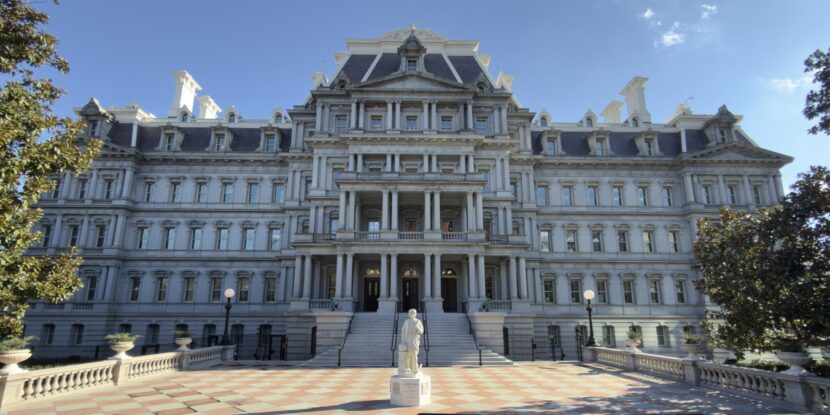
This year, Columbus is back. President Trump installed a statue of the European explorer on the White House grounds, and his Columbus Day proclamation stressed with evident satisfaction that it is “an exact replica of the statue that stood for more than three decades in Baltimore, Maryland.”
While Biden and the Democrats pushed Columbus Day’s rebranding as “Indigenous Peoples’ Day”—an occasion centered more on Western shame and self-flagellation than a genuine celebration of indigenous culture—this year’s proclamation is a reassertion of pride in the European explorers’ courageous spirit: “They unleashed a bold new age of discovery that expanded the horizons of knowledge, carried the splendors of the Western world across an ocean, and set in motion the forces that would culminate in the miracle of July 4, 1776.”
The proclamation is also unashamedly Christian in character, recalling how “as a sign of devotion to God and respect to Ferdinand and Isabella of Spain, Columbus raised a mighty cross in the newly discovered land as a sign that ‘Your Highnesses hold this land for your own, but chiefly as a sign of our Lord Jesus Christ.'”
The National Pulse brings you original articles on American history and American culture, as well as news and current affairs. If you want to help us carry on doing this, without corporate interference, please JOIN THE NATIONAL PULSE or MAKE A DONATION today.
The President also used the holiday to give Italian-Americans their due, which is often overlooked. Italians may have been scarce among the men and women who settled the Thirteen Colonies, but if not for Columbus and his men, the first Americans’ forebears might not have sought to plant their flags in North America until many years later, if at all.
Italian families have built parades, church events, and neighborhood traditions around Columbus Day for a century or more, and the left’s strenuous efforts to make them let those traditions go and look away from Columbus in shame was a serious imposition, which many of them never agreed to submit to.
Trump’s proclamation quotes Pope Leo XIII, who praised the greatness of Columbus’s mind and heart in an 1892 encyclical marking the 400th anniversary of his voyage. A pope writing that way a century and a quarter ago is a useful reminder that the fashion for holding the explorer in contempt is recent. Hopefully, if the shift in tone encapsulated by the proclamation holds, it will also prove to be fleeting.
The timing helps. This is the year the United States marks 250 years since the Declaration of Independence, and the Columbus Day proclamation draws a line from 1492 through Jamestown and the early frontiersmen to July 4, 1776. A nation in the middle of its semiquincentennial ought to be curious about its beginnings. America wears curiosity better than apology, just as their pioneering ancestors did.
So take some time to celebrate Columbus Day. Find a parade, a Mass, or a local Italian-American festival, and take it in. The explorer is back on his pedestal, and the holiday has returned to pride of place in the national calendar. The rest is up to the American people.
The National Pulse is 100% reader-funded. If you value the work of Raheem J. Kassam and his team, please JOIN THE NATIONAL PULSE or MAKE A DONATION today.
Join Pulse+ to comment below, and receive exclusive e-mail analyses.
show less
When far-left rioters tore Christopher Columbus's statue from its pedestal in Baltimore on July 4, 2020, and dumped it in the harbor, it looked like a cultural turning point. The monument had stood for more than 30 years after the late President Reagan dedicated it in 1984. A mob toppled it on Independence Day, and left-wing officials in other cities seized the opportunity to erase similar monuments. Within a year, Joe Biden and Kamala Harris were in government, and the apparatus of state began treating Columbus Day as something else.
show more
By Popular Demand.
The National Pulse Now has an on-site comments section for members. Sign up today and be part of the conversation in our community of almost 15,000.
WE ARE 100% INDEPENDENT AND READER-FUNDED. FOR A GUARANTEED AD-FREE EXPERIENCE AND TO SUPPORT REAL NEWS, PLEASE SIGN UP HERE, TODAY.
For decades since the end of the Second World War, Britain’s “special relationship” with the United States rested on more than shared history and diplomatic rhetoric. Britain provided bases, intelligence, nuclear cooperation, warships, soldiers, and, perhaps most importantly, a government Washington could generally expect to stand beside it during a crisis. But the recent departure of 12 American B-1B Lancer bombers from RAF Fairford following security threats against the base raises an uncomfortable question: Can the United States still rely upon Britain as a serious military ally?
The National Pulse keeps you informed on global affairs. If you value the work of Raheem J. Kassam and his team, please JOIN THE NATIONAL PULSE or MAKE A DONATION today.
Newsletter
Need to Know.
Your free, daily feed from The National Pulse.
Thank You!
You are now subscribed to our newsletter.
The bombers had been deployed to RAF Fairford, the strategically important Royal Air Force base routinely used by the United States for bomber operations in Europe. Following the arrest of several suspects in connection with suspicious activity around the base, and intelligence concerning a potential Iranian-linked drone attack, the entire deployed B-1 force left Britain. President Donald J. Trump subsequently acknowledged that threats played a role in moving the aircraft.
The Fairford Debacle.
Five British men were initially arrested following suspicious activity involving vehicles near the base. They were subsequently released on bail just a day later. A British-Iranian dual national was later arrested and bailed; additional arrests followed.
From Washington’s perspective, the more important question is whether Britain can adequately secure a base housing billions of dollars’ worth of American strategic aircraft against the sort of comparatively cheap drone threat that has transformed modern warfare in places like Ukraine and the Middle East.
Trump himself expressed surprise over the release of suspects, while the B-1s ultimately departed. Whatever conclusions the investigation eventually produces, the sequence of events hardly inspires confidence. Fairford, however, is merely the latest example of a much wider problem.
Chagos and the Limits of the Special Relationship.
Britain’s handling of the Chagos Islands has already raised similar questions over whether Washington can automatically rely upon access to British territory during wartime. Diego Garcia, the largest island in the Chagos Archipelago, is one of America’s most strategically important overseas military facilities. Sitting in the middle of the Indian Ocean, it provides America with a vital staging point for operations stretching from the Middle East to Asia.
London, under former Prime Minister Sir Keir Starmer, pursued a controversial agreement to transfer sovereignty over the Chagos Islands to Mauritius, which has a close relationship to China, while retaining arrangements intended to preserve the Anglo-American base on Diego Garcia in exchange for substantial cash payments.
The problem became especially visible during the Iran conflict. Britain did not completely prohibit American use of British bases. The British government authorized narrowly defined American operations involving British territory. But the Labour government continued to insist that the use of British bases for combat operations was subject to approval on a case-by-case basis.
The question facing the Trump administration is not simply whether Britain technically remains an ally, but whether American commanders can confidently assume access to strategically vital British facilities during a rapidly developing conflict.
The National Pulse keeps you informed about international developments that affect American security. If you value the work of Raheem J. Kassam and his team, please JOIN THE NATIONAL PULSE or MAKE A DONATION today.
Britain’s Vanishing Royal Navy.
Britain is an island nation dependent upon international trade and maritime freedom, making the security of waterways such as the Strait of Hormuz a direct British national interest. However, when tensions escalated in the Gulf, the British government did little to provide any sort of armed response.
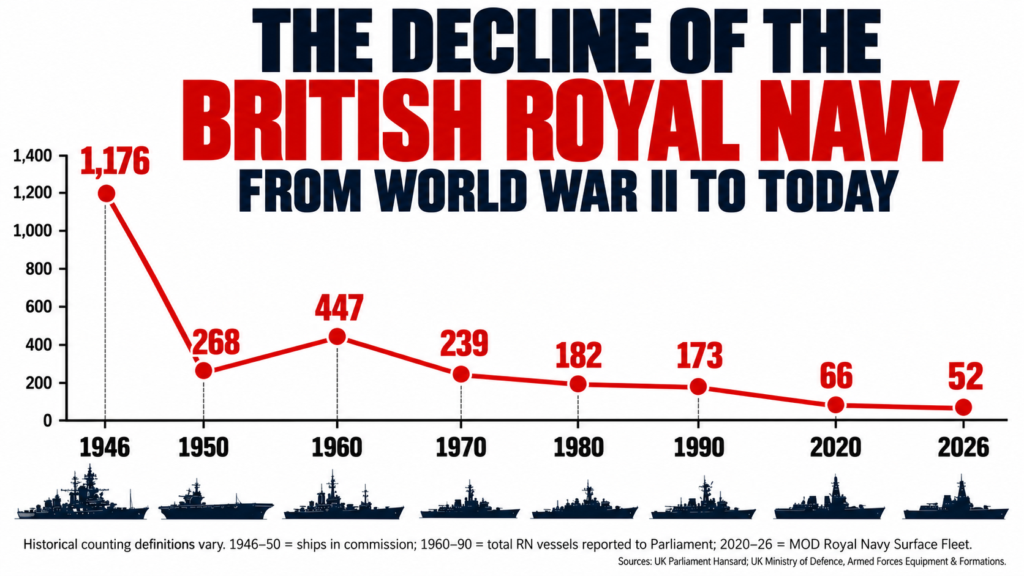
Asked in Parliament about deploying forces to Hormuz, the government said it was considering military options while declining to discuss operational planning. The reality is that Britain’s political hesitation coincides with an increasingly severe shortage of available warships. Official Ministry of Defence statistics showed Britain with just 52 Royal Navy surface vessels as of April 2026, following years of contraction and the retirement of additional frigates and amphibious ships, down from 1,176 navy vessels following the Second World War. The Ministry of Defence maintains that the Navy retains high operational readiness, but it has declined to publish precisely how many warships are immediately available for operations, making it unclear how many ships Britain’s navy could send to a theater like the Strait of Hormuz even if it wanted to.
An Army Struggling with Recruitment.
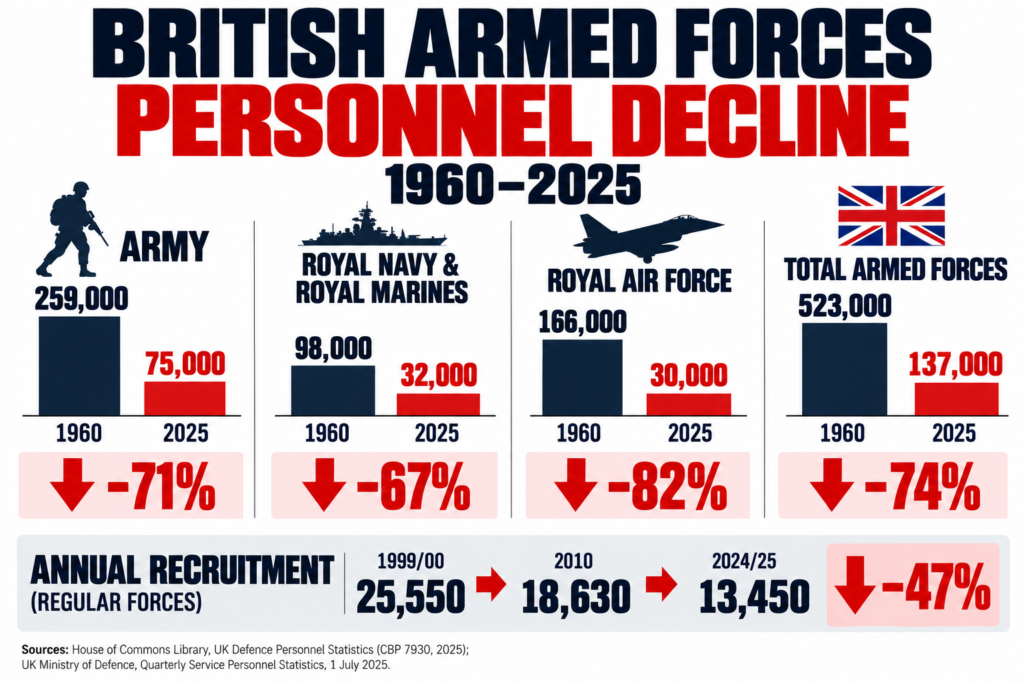
Britain’s Army is faring no better and has undergone a similar decline. According to House of Commons Library figures, the British Army had approximately 70,759 trade-trained regular personnel in April 2026, below its target strength of 73,000. Across the armed forces, Britain was approximately 8,460 trained personnel below target. The Royal Navy and Royal Marines were around seven percent below target, while the Royal Air Force was roughly 12 percent short.
By contrast, Britain had approximately 186,000 full-time armed forces personnel in 2012. By 2026, that number had fallen to roughly 149,000, a reduction of around 37,000 personnel in little more than a decade. Britain’s Army is now smaller than at any point after 1793, just before the Napoleonic wars, according to some estimates.
Despite this, Britain continues to talk like the global military power it was in prior decades, while maintaining armed forces increasingly lacking the manpower and numerical depth traditionally required of one.
From America’s Closest Ally to Strategic Liability?
Britain remains deeply integrated into American defense and intelligence structures. Five Eyes intelligence cooperation, nuclear collaboration, NATO planning, joint special forces operations, and America’s continued access to British facilities still give Britain a privileged position among America’s allies.
For much of the last century, Britain offered Washington a uniquely useful combination: geography, intelligence, military capability, diplomatic support, and governments prepared to fight alongside America from Korea and the Persian Gulf to Afghanistan and Iraq. That is why the image of America’s B-1 bombers departing RAF Fairford is so striking.
American bombers arrived in Britain because Britain was supposed to provide a secure forward operating location from which the United States could project military power to places such as Iran, something Britain seemingly cannot do itself.
The danger for the special relationship is that Washington may increasingly find itself asking a very different question: not whether Britain remains America’s friend, but whether Britain can be relied on.
To keep independent reporting at The National Pulse alive, we need your support. Please JOIN THE NATIONAL PULSE or MAKE A DONATION today. We are 100% reader-funded.
Join Pulse+ to comment below, and receive exclusive e-mail analyses.
show less
For decades since the end of the Second World War, Britain’s “special relationship” with the United States rested on more than shared history and diplomatic rhetoric. Britain provided bases, intelligence, nuclear cooperation, warships, soldiers, and, perhaps most importantly, a government Washington could generally expect to stand beside it during a crisis. But the recent departure of 12 American B-1B Lancer bombers from RAF Fairford following security threats against the base raises an uncomfortable question: Can the United States still rely upon Britain as a serious military ally?
show more
By Popular Demand.
The National Pulse Now has an on-site comments section for members. Sign up today and be part of the conversation in our community of almost 15,000.
WE ARE 100% INDEPENDENT AND READER-FUNDED. FOR A GUARANTEED AD-FREE EXPERIENCE AND TO SUPPORT REAL NEWS, PLEASE SIGN UP HERE, TODAY.
President Donald J. Trump is tightening the economic noose around Cuba’s communist dictatorship, targeting the fuel supplies keeping the increasingly desperate regime afloat. Last week, U.S. authorities announced the seizure of 90 shipments of biodiesel headed for the island, totaling more than 600,000 gallons and valued at approximately $3 million.
The National Pulse gives you the best analysis of geopolitical trends. If you help support Raheem J. Kassam and his team continue this work, please JOIN THE NATIONAL PULSE or MAKE A DONATION today. We are 100% reader-funded.
Newsletter
Need to Know.
Your free, daily feed from The National Pulse.
Thank You!
You are now subscribed to our newsletter.
The shipments, intercepted in Houston and Port Everglades, Florida, were allegedly intended for ENETEC, a sanctioned Cuban state-owned energy company. The operation is the latest escalation in Trump’s campaign to economically isolate the Communist country. It also raises questions as to whether Trump and his administration can topple the communist regime through economic means, rather than sending troops.
Six Decades of Communist Rule.
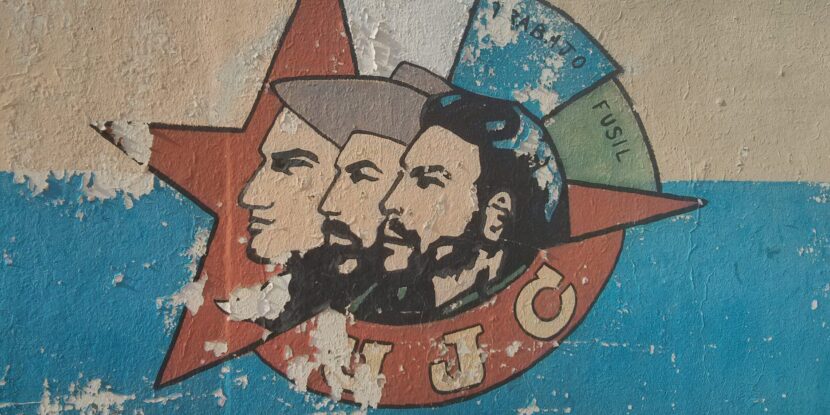
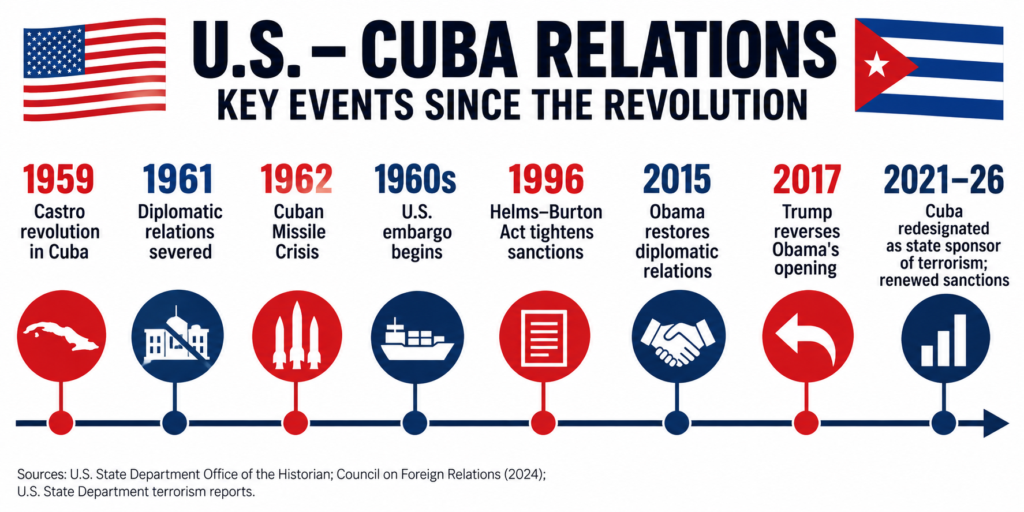
Cuba has been an issue for the U.S. since 1959, when Fidel Castro overthrew President Fulgencio Batista and subsequently transformed the island into a Soviet-aligned communist state just 90 miles from Florida. Successive American administrations attempted to contain Castro’s revolution, beginning with economic sanctions under Dwight Eisenhower and the failed Bay of Pigs invasion under John F. Kennedy in 1961. The following year, the Cuban Missile Crisis brought Washington and Moscow to the brink of nuclear war after the Soviets deployed nuclear missiles to the island.
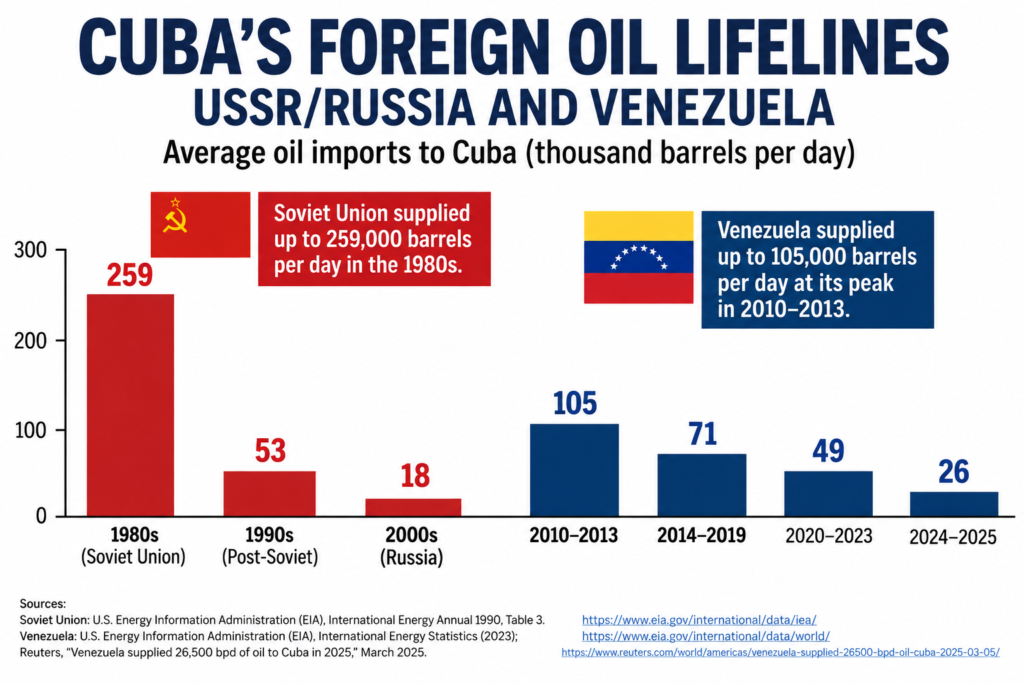
Despite decades of American sanctions, Castro survived, largely because the Soviet Union provided an economic lifeline through subsidized petroleum products, financial assistance, and preferential trade agreements.
When the Soviet Union collapsed in 1991, Cuba saw its economy contract dramatically. Food became scarce, and transportation infrastructure deteriorated. Despite this, the Communist Party survived.
The Helms-Burton Act of 1996 subsequently strengthened American sanctions, tying their removal to democratic reforms. Former President Barack Obama controversially restored diplomatic relations in 2015, but the communist government retained its monopoly on political power.
Trump, by contrast, has embraced economic coercion, betting that the regime’s deteriorating finances and dwindling foreign support will accomplish what previous American presidents could not.
From Soviet Subsidies to Venezuelan Oil.
For decades, Cuba’s socialist economy has depended on foreign benefactors to keep the country’s economy afloat. Following the Soviet collapse, Havana eventually found another patron in Venezuela’s socialist dictator Hugo Chávez, who supplied subsidized petroleum in exchange for Cuban medical personnel and other services. His successor, Nicolás Maduro, maintained the relationship, even as Venezuela’s own economy collapsed.
That arrangement suffered a potentially fatal blow in January 2026, when American forces captured Maduro during a military operation in Caracas. Venezuelan oil shipments to Cuba subsequently stopped, depriving Havana of one of its most important sources of energy. Venezuela had supplied approximately 26,500 barrels of oil per day in 2025, covering roughly half of Cuba’s petroleum deficit.
Mexico, another important supplier, has also suspended shipments under American pressure. Russia remains an ally, but its assistance has been insufficient to replace the lost petroleum supplies, while China has shown little interest in rescuing the Cuban regime. Cuba now faces the very real prospect of economic collapse without a reliable foreign patron willing to finance its survival.
Cuba’s Economy Is Running Out of Power.
Cuba’s aging electricity infrastructure, already plagued by decades of underinvestment and poor maintenance, has suffered repeated nationwide failures. The island’s chronic fuel shortages have compounded the problem, leaving entire communities without electricity for extended periods.
In May, Cuban authorities acknowledged that the country had exhausted its diesel and fuel oil reserves. Parts of Havana experienced blackouts lasting 20 to 22 hours daily, provoking demonstrations in which residents demanded the restoration of electricity. Meanwhile, food shortages, collapsing purchasing power, inadequate public transportation, and deteriorating public services have contributed to a huge exodus of Cubans seeking better lives elsewhere.
Cuba’s centrally planned economy has long suffered from low productivity, restrictions on private enterprise, inefficient state monopolies, and chronic shortages of foreign currency. American sanctions are just part of the country’s problems.
However, the Trump administration’s latest restrictions have undoubtedly intensified the crisis, particularly by limiting the fuel needed to operate power stations, factories, and transportation networks. For Trump, this vulnerability presents an opportunity to force concessions from a communist government increasingly unable to meet its population’s basic needs.
Regime Change Without Another American War.
The administration’s strategy appears designed to exploit Cuba’s dependence on imported energy while avoiding the costs and risks of a direct military intervention. Rather than invading the island, Washington is targeting the economic resources sustaining the Communist Party’s control.
Whether economic devastation will translate into political change remains uncertain. Communist governments have historically demonstrated considerable resilience, often shifting the costs of economic crises onto ordinary citizens while preserving the privileges of ruling elites.
The humanitarian consequences also threaten to undermine Washington’s objectives. Prolonged blackouts, food shortages, and unemployment could encourage further migration toward the United States rather than organized opposition capable of replacing the government.
Havana has shown little willingness to surrender. In an October 5 interview, Cuba’s senior diplomat in Washington acknowledged continuing communication with American officials but denied that formal negotiations were underway.
Is the End Finally Near?
For 67 years, Cuba’s communist leadership has survived American sanctions, diplomatic isolation, economic disasters, and the collapse of its most powerful allies.
However, the situation confronting the Communist regime today is different. The Soviet Union is long gone, Maduro is imprisoned in the United States, Venezuelan oil shipments have stopped, and Cuba’s economy is struggling to function amid an unprecedented energy crisis both in Cuba and worldwide.
President Donald J. Trump’s approach to Cuba represents an unusually direct challenge to a communist system that has relied on foreign subsidies for much of its existence. For the first time in decades, Cuba’s rulers may be running out of both money and powerful friends. Deprived of the energy and foreign assistance that have sustained it, Cuba’s regime may be toppled without a shot being fired.
Join Pulse+ to comment below, and receive exclusive e-mail analyses.
show less
President Donald J. Trump is tightening the economic noose around Cuba's communist dictatorship, targeting the fuel supplies keeping the increasingly desperate regime afloat. Last week, U.S. authorities announced the seizure of 90 shipments of biodiesel headed for the island, totaling more than 600,000 gallons and valued at approximately $3 million.
show more
By Popular Demand.
The National Pulse Now has an on-site comments section for members. Sign up today and be part of the conversation in our community of almost 15,000.
WE ARE 100% INDEPENDENT AND READER-FUNDED. FOR A GUARANTEED AD-FREE EXPERIENCE AND TO SUPPORT REAL NEWS, PLEASE SIGN UP HERE, TODAY.
According to its latest “pay gap” report, the British Broadcasting Corporation (BBC), Britain’s public broadcaster, pays white employees less on average than non-white employees.
BBC pay is divided into bands: Band A, Band B, Band C, Band D, Band E, Band F, and Senior Leaders, with Band A employees earning the least and Senior Leaders earning the most. According to the newly released report, the average hourly pay for white BBC employees in Band A is 13.2 percent lower than that of their minority counterparts, while white employees in Band B earn 1.3 percent less. In Band C, white BBC staff earn 5.4 percent less than non-white employees in the same band, whereas in Band D, white staff earn 3.5 percent less. In Band E, White employees earned 4.3 percent less.
Band F and Senior Leaders were the only bands in which white BBC employees earned more per hour on average than their non-white colleagues, with the former earning 0.6 percent more and the latter 5.3 percent more. As such, the data suggests that white employees beneath the apex of the BBC’s pay hierarchy, and especially white employees on lower pay, are paid less well per hour than their non-white co-workers.
The report also revealed that female senior leaders earned 1.4 percent more than their male counterparts, while LGBT senior leaders were paid 8.8 percent more, and disabled employees in the same bracket earned 7.5 percent more, indicating that white, straight, able-bodied men are at the bottom of the pay hierarchy.
🚨 NEW: The BBC pays white staff less than ethnic minority colleagues in almost every pay band, its own pay gap report shows.
• Median hourly pay for black, Asian, mixed and other minority ethnic staff was 13.2% higher in the lowest band. Other gaps ran from 1.3% to 5.4%. White… pic.twitter.com/qx0fsBZOhn
The BBC has faced criticism in recent years for restricting recruitment in certain areas to applicants from ethnic minority backgrounds. While the Equality Act 2010, the United Kingdom’s cornerstone anti-discrimination law, officially prohibits racial preferences in hiring, Section 158 of the Act permits organizations to pursue so-called “Positive Action,” which involves implementing measures to boost the representation of groups deemed marginalized.
The BBC uses this provision to bar white people from applying for certain early career opportunities, such as internships and training programs. For instance, back in 2024, the BBC advertised a 12-month Trainee Researcher placement. The applicant specification stated that the role was only open to “Black, Asian and Ethnically Diverse” individuals.
Unlike the BBC, The National Pulse has no license fee. To support Raheem J. Kassam and his team, please JOIN THE NATIONAL PULSE or MAKE A DONATION today.
Internal Diversity Targets to Boost Non-White Representation.
The BBC also uses internal diversity targets. The corporation operates a 50:20:14:25 diversity framework, covering 50 percent women, 20 percent Black, Asian and Minority Ethnic (BAME) staff, 14 percent deaf, disabled and neurodivergent staff, and 25 percent staff from lower socio-economic backgrounds. According to BBC data published in March, women account for 50.7 percent of BBC staff, while ethnic minority staff constitute 17.8 percent, disabled staff constitute 12.4 percent, and employees from lower socio-economic backgrounds comprise 20.7 percent.
Back in January, an independent review commissioned by the BBC Board, the corporation’s governing body, found that the BBC utilized “tick-box” diversity targets and accused the organization of “shoe-horning” diversity into its content, often at the expense of output quality.
Another Scandal for the Beeb?
The recent payment figures have already sparked accusations of hypocrisy. Many have already noted that if a disparity showed white employees earning more than non-white employees, the corporation would likely rush to take action and implement “corrective” measures. However, because the disparity favors non-white employees over their white counterparts, the BBC is likely to do nothing.
If you want to help Raheem J. Kassam and his team of reporters to hold the establishment media to account, please JOIN THE NATIONAL PULSE or MAKE A DONATION today.
Join Pulse+ to comment below, and receive exclusive e-mail analyses.
show less
According to its latest "pay gap" report, the British Broadcasting Corporation (BBC), Britain's public broadcaster, pays white employees less on average than non-white employees.
show more
By Popular Demand.
The National Pulse Now has an on-site comments section for members. Sign up today and be part of the conversation in our community of almost 15,000.
WE ARE 100% INDEPENDENT AND READER-FUNDED. FOR A GUARANTEED AD-FREE EXPERIENCE AND TO SUPPORT REAL NEWS, PLEASE SIGN UP HERE, TODAY.
Earlier this week, during the Conservative Party’s annual conference, Sir John Curtice, widely regarded as Britain’s top polling analyst, told Conservative Party members that the party is “four points below what was your worst ever performance” and emphasized that “twenty percent is historically not a good number.”
The polling guru also noted that the Conservatives are two to four points below their 2024 general election vote share, when they suffered historic losses. Sir John cited findings from British polling firms YouGov, Survation, and More in Common, which showed that the party was down three percent, four percent, and two percent, respectively, compared to their disastrous 2024 showing. This is even though the Conservatives have a new leader and more than two years to recover from their defeat.
Standing room only for John Curtice’s briefing on the Tories’ electoral chances at the Conservative Party Conference. He has just told the activists here that the Tories are doing no better than the 2024 general election. 😳 pic.twitter.com/ADjMY8jBSV
However, not only has support for the Conservatives flatlined at around 20 percent in the polls, but a significant chunk of the party’s support has been lost to Nigel Farage’s Reform UK party. According to Sir John, nearly “one in four” voters who backed the Tories in 2024 have since defected to Reform. He also noted that Conservatives have lost their historic advantage among people who voted Leave in the 2016 referendum on British membership of the European Union. Specifically, 41 percent of Leave voters now back Reform, compared to just 26 percent who still back the Tories.
The National Pulse is not controlled by corporate interests. If you want to help us stay independent, please JOIN THE NATIONAL PULSE or MAKE A DONATION today.
Same Old Tories.
In addition to losing voters to Reform, Sir John emphasized that the Conservatives were failing to capitalize on popular concerns. For example, only 51 percent of Conservative voters who think immigration has risen still support the party, while 43 percent have defected to Reform. By comparison, 68 percent of Conservative voters who think immigration has stayed the same remain Conservative.
Sir John explained that the party was still suffering from its record in government while Reform are “simply speaking a language” that appeals more to “socially conservative, pro-Brexit Britain.”
Uniparty Revival?
Sir John’s warning to the Conservatives follows a warning aimed at Prime Minister Andy Burnham’s Labour Party, which has similarly pushed the idea of a so-called “Burnham Bounce.” “That five-point bounce is not that unusual for new Prime Ministers who enter No. 10 in the middle of a parliament… Gordon Brown had around four points, Boris Johnson had about six points,” noted Sir John last month, adding that Reform is on track to become the biggest party, even according to polling which puts Labour ahead.
If you want to help Raheem J. Kassam and his team in writing original stories about British politics, please JOIN THE NATIONAL PULSE or MAKE A DONATION today.
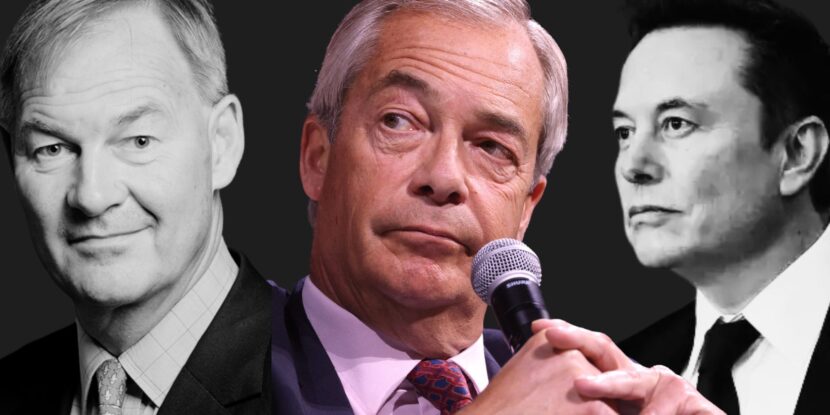
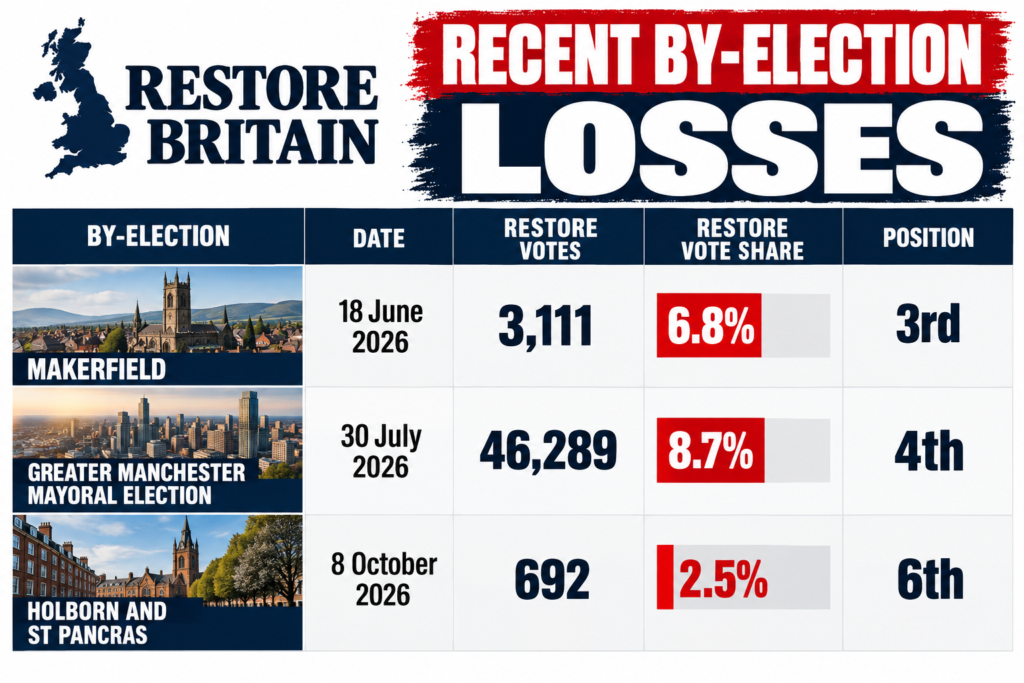
The Elon Musk-backed Restore Britain party suffered another humiliating electoral defeat last Thursday, securing just 692 votes of 27,211 cast in the Holborn and St Pancras parliamentary by-election. Analysis suggests Rupert Lowe’s insurgent political party is increasingly likely to serve as a spoiler for Nigel Farage’s Reform UK party, helping only to usher in a far-left alliance of the Labour Party, the Liberal Democrats, and the Green Party.
The National Pulse is solely funded by readers like you. To support Raheem J. Kassam and his team, please JOIN THE NATIONAL PULSE or MAKE A DONATION today.
Newsletter
Need to Know.
Your free, daily feed from The National Pulse.
Thank You!
You are now subscribed to our newsletter.
The official results show Restore’s candidate, Tyler Johnson, finishing sixth with approximately 2.5 percent of the vote, trailing even the Liberal Democrats and securing fewer than half the votes won by Reform.
Labour’s Sagal Abdi-Wali won the left-dominated constituency, previously represented by former Prime Minister Keir Starmer, with 12,292 votes, followed by Green Party leader Zack Polanski on 8,928.
The result represents yet another embarrassment for Lowe’s party, which has benefited from considerable social media attention, particularly from billionaire X owner Elon Musk, but it has struggled to translate its online exposure into votes.
The party dedicated significant resources to the race, hosting almost daily “action days,” and distributing tens of thousands of leaflets at great campaign cost. The campaign also saw their activists have physical confrontations with far-left agitators who attempted to disrupt the democratic process.
A Growing Record of Electoral Failures.
The London humiliation follows Restore’s disappointing performance in the June parliamentary by-election in Makerfield, where Labour’s Andy Burnham defeated Reform candidate Rob Kenyon by 24,927 votes to 15,696. Restore’s Rebecca Lee Shepherd finished a distant third, collecting just 3,111 votes.
Before the contest, data revealed that Restore could split the anti-establishment vote, as polling placed Labour on 45 percent, Reform on 40 percent, and Restore on approximately eight percent. Although Burnham ultimately won by a margin substantially larger than Restore’s entire vote, the result demonstrated the party’s ability to attract thousands of right-wing voters without seriously threatening to win the constituency itself.
Restore also failed to make a breakthrough in July’s Greater Manchester mayoral election, where it attracted approximately 8.7 percent of the vote and finished fourth.
Restore’s parliamentary results remain nil, aside from Lowe’s own seat, which he won as a Reform candidate. The danger for Reform is not that Lowe will defeat Farage nationally, but that even modest Restore support could make the difference between victory and defeat in marginal seats.
Origins.
Restore Britain traces its origins to a feud between Lowe and Reform UK.
The former MEP and loathed Southampton FC owner is alleged to have made violent threats towards Zia Yusuf, the party’s shadow home secretary. Shortly after, Lowe briefed establishment news reporters against Farage, stating: “We have to change from being a protest party led by the Messiah.”
At this point in time, March 2025, Reform UK was polling neck-and-neck with the Labour Party. Lowe’s actions since have helped contribute to a decline in Reform’s fortunes, and an uptick for the left-wing Labour Party.
He then established his own political movement in June 2025, eventually transforming it into a registered political party in February 2026.
Restore has faced questions about its political direction and personnel. Restore spokesman Charlie Downes described the organization as an enemy of populism, raising questions about its relationship with the wider anti-establishment movement. Restore claims to represent a more uncompromising alternative to Britain’s political establishment, yet its electoral interventions may make it easier for establishment parties to retain power.
Elon Musk.
One of Restore’s most significant political assets has been the public support of Elon Musk, whose relationship with Farage deteriorated dramatically after the billionaire began criticizing the Reform leader’s suitability to lead Britain’s populist-right movement.
Musk has repeatedly promoted Lowe on X, publicly praised his political positions, and amplified Restore’s messaging to his enormous online audience. Lowe, as a result, has been forced to declare over £100,000 in X payments.
Musk’s political influence and financial resources could theoretically heavily influence Restore’s prospects, but neither his endorsements nor the party’s existing funding have yet produced any sort of parliamentary breakthrough. Instead, the billionaire’s preferred alternative to Farage appears increasingly capable of dividing Britain’s right-wing electorate without building a viable governing coalition of its own.
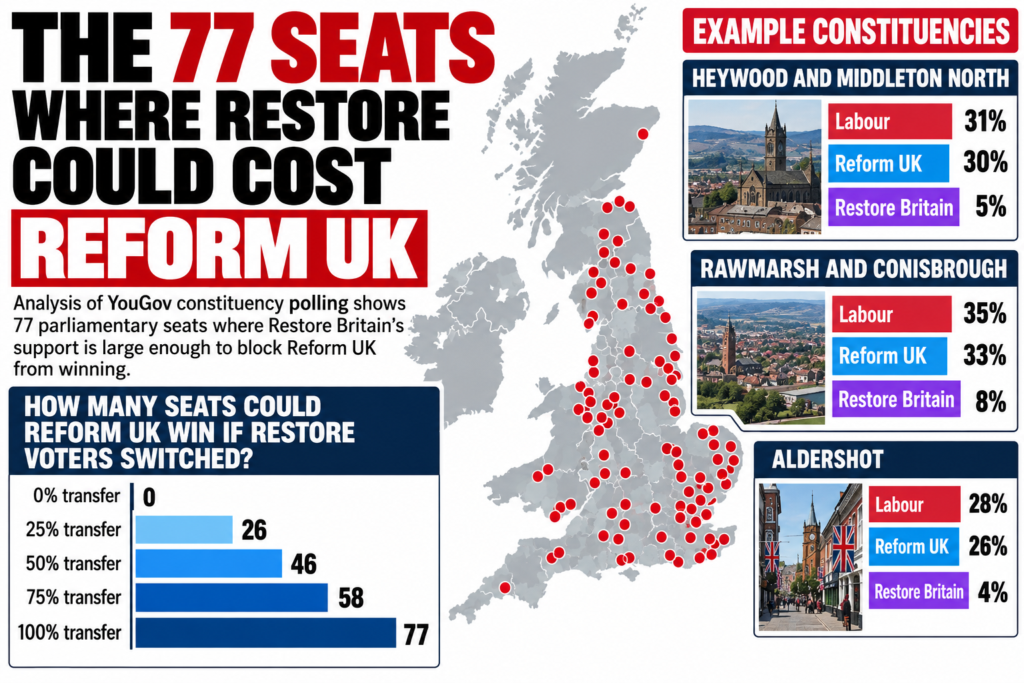
Restore Could Cost Reform 77 Seats.
The potential consequences of this division were examined in a September 24 National Pulse analysis, which used constituency-level YouGov MRP polling to identify 77 parliamentary seats where Restore’s projected support was at least as large as Reform’s deficit to the projected winner.
Speaking with former British Prime Minister Liz Truss, The National Pulse Editor-in-Chief Raheem Kassam recently warned that Lowe’s party could inflict substantial electoral damage even without winning constituencies itself. “Seventy-seven seats, which is a significant number of parliamentary seats that they would effectively block Reform from winning,” Kassam explained.
The constituencies at risk include working-class communities, traditional Conservative Party strongholds, and former Labour heartlands where Reform has increasingly challenged the establishment parties.
“You’ve got a lot of East of England, a lot of working-class communities, a lot of old tourist towns, fisheries, and then you have some Red Wall seats in there as well,” Kassam said.
“Restore hasn’t really moved from hovering between six and eight percent since they launched,” he observed, arguing that the splinter party appeared to have reached a relatively firm electoral ceiling. “But that’s all they need to be spoilers,” he added.
If just 25 percent of Restore’s projected supporters transferred to Reform, the latter would move ahead in 19 additional constituencies and draw level in another seven on the rounded polling figures. At a 50 percent transfer, Reform would move ahead or draw level in 46 constituencies, rising to 58 at a 75 percent transfer. Transferring the entire Restore vote would put Reform ahead in 58 seats and level in another 19.
These scenarios illustrate the potential consequences of right-wing vote fragmentation under Britain’s first-past-the-post electoral system. In Heywood and Middleton North, for example, YouGov projected Labour on 31 percent, Reform on 30 percent, and Restore on five percent. Reform would need only one-fifth of Restore’s support to erase Labour’s projected advantage. In Rawmarsh and Conisbrough, Labour’s projected two-point lead over Reform could similarly disappear if just one-quarter of Restore’s eight percent support transferred to Farage’s party.
Kassam also suggested that a substantial portion of Restore’s electorate might eventually be persuaded to back Reform rather than risk another Labour or Conservative victory. “It can be done,” he told Truss, arguing that some Restore supporters were former Reform voters while others might be persuaded by the prospect of preventing an establishment victory.
Restoring Britain, or Saving the Establishment?
Restore Britain’s central electoral problem is becoming more and more apparent. The party has attracted major publicity, the richest man on Earth as a supporter, and its leader sits in Parliament, but its results suggest it is lacking the ability to go any further than a single MP elected on a Reform ticket.
Meanwhile, the potential consequences of its continued participation in competitive races could have a much larger effect on the outcome of the next general election. Farage’s Reform UK is attempting to displace Britain’s established political parties. Lowe’s “Restore Britain,” by contrast, risks dividing the very electorate that could make such a major realignment possible.
For all its promises to restore Britain, Musk’s preferred political project may ultimately be remembered less for the seats it won than for the seats it prevented Reform from winning.
Join Pulse+ to comment below, and receive exclusive e-mail analyses.
show less
The Elon Musk-backed Restore Britain party suffered another humiliating electoral defeat last Thursday, securing just 692 votes of 27,211 cast in the Holborn and St Pancras parliamentary by-election. Analysis suggests Rupert Lowe's insurgent political party is increasingly likely to serve as a spoiler for Nigel Farage's Reform UK party, helping only to usher in a far-left alliance of the Labour Party, the Liberal Democrats, and the Green Party.
show more
By Popular Demand.
The National Pulse Now has an on-site comments section for members. Sign up today and be part of the conversation in our community of almost 15,000.
WE ARE 100% INDEPENDENT AND READER-FUNDED. FOR A GUARANTEED AD-FREE EXPERIENCE AND TO SUPPORT REAL NEWS, PLEASE SIGN UP HERE, TODAY.
A British man facing charges for allegedly plotting against Reform UK party leader Nigel Farage and murdering Reform spokeswoman Ann Widdecombe was motivated by “extreme left-wing” ideology, according to prosecutors.
PULSE POINTS
❓ WHAT HAPPENED: Joshua Kerry, a 28-year-old British man, has been charged with the murder of British elder stateswoman Ann Widdecombe, a former Conservative Party lawmaker and government minister turned Reform UK party immigration and justice spokeswoman, and plotting against Nigel Farage, Reform’s leader. Prosecutors alleged on Friday that Kerry was driven by an “extreme left-wing and/or an anti-establishment mindset.”
💬 KEY QUOTE: “He held particular hostility towards Reform,” said Prosecutor Jonathan Polnay.
🎯 IMPACT: The case has heightened concerns over the safety of right-wing politicians in the United Kingdom, especially given the wider context of leftist attacks on elected officials and immigration enforcement across the West.
📰 DETAIL: Kerry allegedly compiled a list of over 100 politicians and public figures, including Farage and Widdecombe, and attempted to enter Farage’s home in April 2025. The attack on Miss Widdecombe, a prominent figure in British politics for many years, occurred in July, with the 78-year-old being beaten to death with a hammer in her home.
👀 FLASHBACK: Raheem Kassam, Editor-in-Chief of The National Pulse, argued in a recent appearance on Stephen K. Bannon’s War Room show that Miss Widdecombe’s murder may have been avoided if police had taken an attempted firebombing of Farage’s home, now linked to Kerry, more seriously. Reform, known for its strict immigration policies, has led many national opinion polls since Britain’s 2025 general election, although it now faces stiffer competition from the incumbent Labour Party under its new leader, Andy Burnham.
Join Pulse+ to comment below, and receive exclusive e-mail analyses.
Newsletter
Need to Know.
Your free, daily feed from The National Pulse.
Thank You!
You are now subscribed to our newsletter.
show less
A British man facing charges for allegedly plotting against Reform UK party leader Nigel Farage and murdering Reform spokeswoman Ann Widdecombe was motivated by "extreme left-wing" ideology, according to prosecutors.
show more
By Popular Demand.
The National Pulse Now has an on-site comments section for members. Sign up today and be part of the conversation in our community of almost 15,000.
WE ARE 100% INDEPENDENT AND READER-FUNDED. FOR A GUARANTEED AD-FREE EXPERIENCE AND TO SUPPORT REAL NEWS, PLEASE SIGN UP HERE, TODAY.
The Trump administration has announced reforms to Optional Practical Training in a bid to prevent foreign students on temporary visas from remaining in the United States permanently and protect American workers.
The Trump administration has proposed increasing the cost of Optional Practical Training (OPT), which allows foreign students on temporary F-1 visas to work in the United States after completing their studies. Under the proposal, universities would face a $70,000 charge when they initially recommend an international student for OPT, followed by a $30,000 fee for subsequent training, including STEM (Science, Technology, Engineering, and Mathematics) extensions. The current fee is roughly $500. The proposal aims to prevent abuse of the OPT system and protect American workers.
Do Foreign Students Contribute to the United States?
Foreign students provide American universities with revenue through tuition and living expenses, as well as through a research pipeline that starts in the university system. Last year, approximately 1.18 million international students studied at colleges and universities in the United States, generating an estimated $42.9 billion in economic activity, according to NAFSA (National Association of Foreign Student Advisers).
According to current estimates, roughly six percent of science and engineering bachelor’s degrees in the United States are awarded to foreign students. The proportion increases when it comes to graduate degrees, with just over half of all master’s degrees in the same field going to foreign students, as well as 38 percent of science and engineering doctorates. Research from the National Center for Science and Engineering Statistics shows that temporary visa holders earned 61 percent of doctorates in computer and information sciences, 54 percent of engineering doctorates, and 51 percent of mathematics and statistics doctorates in the United States in 2024.
The era of Americans being undercut by cheap foreign labor is over.
Optional Practical Training (OPT) was never meant to be a back door into the American workforce.
Crafting financial incentives to hire foreigners over Americans is contrary to the competition that makes our… https://t.co/guRe5FWVQl
This has long-term economic ramifications for the American job market, as approximately 37 percent of international students who graduate from U.S. universities remain in the country years later. Retention varies significantly by degree level, at roughly 18 percent for bachelor’s graduates, 43 percent for master’s graduates, and 80 percent for doctoral graduates, according to a report from the Aspen Institute’s Economic Strategy Group published last year.
The National Pulse helps you stay on top of the latest political and economic decisions. To support Raheem J. Kassam and his team, please JOIN THE NATIONAL PULSE or MAKE A DONATION today.
Comparisons With H-1B Visa Reform.
The Trump administration is aware that employers can obtain cheap foreign labor through the F-1 visa system, thereby circumventing the H-1B visa system, which is subject to an annual cap, among other restrictions. The H-1B system has been subject to various reforms by the Trump administration. Last year, President Donald J. Trump announced a $100,000 fee on H-1B workers to incentivize employers to hire Americans. This followed an anti-fraud investigation by Vice President JD Vance.
As such, the proposal to reform OPT is an extension of the Trump administration’s crackdown on H-1B visas. The proposal is also comparable to previous H-1B reform, as the Trump administration aims to use economic incentives to alter corporate decision-making. The measure reflects that, like American workers, American students face economic pressures from immigration, making F-1 reform an extension of the Trump administration’s America First philosophy.
What Does This Mean for American Graduates?
The proposal has sparked debate over whether sharply increasing employment costs would benefit American graduates or encourage international talent to go elsewhere. Significantly, making foreign graduates far more expensive to employ would give American graduates a stronger market position when competing for jobs, particularly where foreign workers and Americans have similar skills.
If you want to help Raheem J. Kassam and his team bring you well-researched, high-quality content, please JOIN THE NATIONAL PULSE or MAKE A DONATION today.
Join Pulse+ to comment below, and receive exclusive e-mail analyses.
show less
The Trump administration has announced reforms to Optional Practical Training in a bid to prevent foreign students on temporary visas from remaining in the United States permanently and protect American workers.
show more
By Popular Demand.
The National Pulse Now has an on-site comments section for members. Sign up today and be part of the conversation in our community of almost 15,000.
WE ARE 100% INDEPENDENT AND READER-FUNDED. FOR A GUARANTEED AD-FREE EXPERIENCE AND TO SUPPORT REAL NEWS, PLEASE SIGN UP HERE, TODAY.
A Reform UK party government under Nigel Farage will face an immediate attempt by the permanent bureaucracy to nullify the election result, and it must have the legal powers to fire participants ready before hospitals and police stations empty, The National Pulse Editor-in-Chief Raheem Kassam has warned.
Speaking to former Prime Minister Liz Truss, Kassam said the scale of the bureaucracy’s reaction will depend on the size of any parliamentary majority. With a large enough bloc to pass legislation comfortably, a Farage government could move at once. Without one, he warned, the apparatus of state simply waits the elected officials out. “I imagine that, day one, you’re going to get sort of a mass slowdown or general strike” in the National Health Service (NHS) and other government entities, he said. “If Reform wins, you need to have legislation passed immediately that says if you participate in these sorts of things, you lose your jobs.”
Hospitals and police stations cannot be left understaffed, he argued, because civil servants have decided to make a political point after the public has already voted. The threat of dismissal would make many think twice. A minority government or a confidence-and-supply arrangement would be far harder to explain to voters, and Kassam has not ruled out Kemi Badenoch’s Conservatives cutting a deal with Labour specifically to keep Reform away from the levers.
Kassam rejected the usual label for the permanent bureaucracy as “the Blob,” calling it “cartoonish.” Instead, he argued it should be called “the regime,” or something like “the Deep State,” as is now commonly used in America.
Raheem J. Kassam and his team bring you deeply researched, original analysis every day. To help us keep you ahead of the curve, please JOIN THE NATIONAL PULSE or MAKE A DONATION today.
Part of the legal foundation for the deep state, Kassam and Truss agreed, is the Constitutional Reform and Governance Act 2010. It placed civil servants under a code interpreted by other civil servants, made government ministers unable to fire them, and allowed officials to withhold information from the Prime Minister on the grounds that they were legally obliged not to share it. Kassam’s answer is that the Act has to be repealed on day one, with Parliament sitting continuously if required, as Farage has vowed, in the same spirit as the early Trump executive order blitz. Talking about anything else, he said, “is for the birds.”
He highlighted the American experience with the Department of Government Efficiency (DOGE) as a warning rather than a model. Operatives in the U.S. reported getting nowhere near half of what they intended, he observed, because the permanent state slowed, litigated, and applied external pressure until the effort shrank. A Farage government that has not already written a strike-and-dismissal statute and committed to tearing out the Tony Blair-era insulation around the Civil Service, the Bank of England, and the quasi-governmental agencies, will discover the same limits on the morning after its elections.
Join Pulse+ to comment below, and receive exclusive e-mail analyses.
show less
A Reform UK party government under Nigel Farage will face an immediate attempt by the permanent bureaucracy to nullify the election result, and it must have the legal powers to fire participants ready before hospitals and police stations empty, The National Pulse Editor-in-Chief Raheem Kassam has warned.
show more
By Popular Demand.
The National Pulse Now has an on-site comments section for members. Sign up today and be part of the conversation in our community of almost 15,000.
Share Story
FacebookTwitterWhatsappTruthTelegramGettrCopy Link
Real News Fan? Show It!
Many people are shocked to learn that because of active censorship, we currently have to spend more time making sure you can even see The National Pulse, than on producing the news itself. Which sucks. Because we do this for the truth, and for you.
But the regime doesn’t want you being informed. That’s why they want us to go away. And that will happen if more people don’t sign up to support our work. It’s basic supply and demand. So demand you get to read The National Pulse, unrestricted. Sign up, today.
We don’t sell ads, and refuse corporate or political cash. It all comes down to you, the reader. I hope you can help.