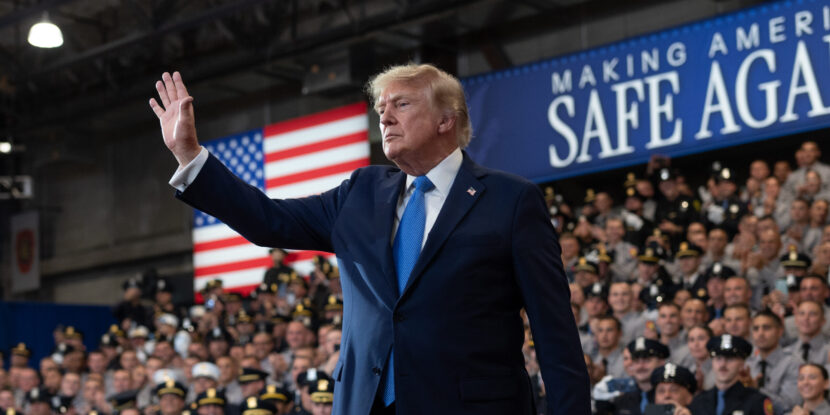



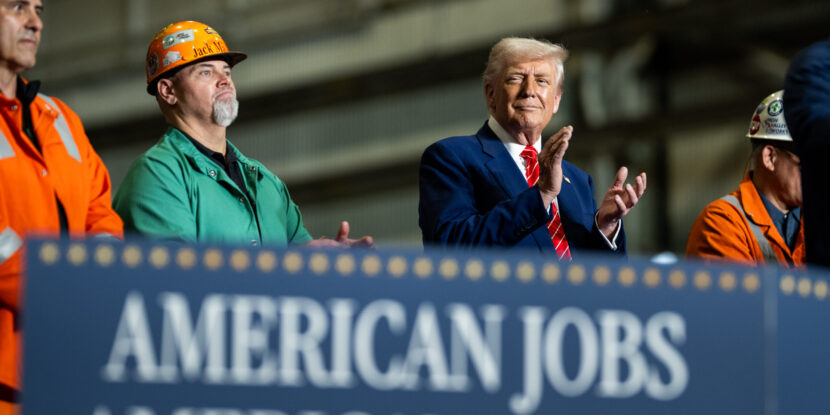

In the run-up to the November midterm elections, which are projected to be tight, the Trump administration has announced several economic nationalist measures, suggesting that the White House believes a renewed focus on “America First” economic policy can improve the GOP’s fortunes.
The National Pulse keeps track of the latest decisions from the White House. If you value the work of Raheem J. Kassam and his team, please JOIN THE NATIONAL PULSE or MAKE A DONATION today.
Harvest Fuel Relief.
On October 20, President Donald J. Trump announced an $8 billion Harvest Fuel Relief Program to help farmers cope with high diesel prices during this harvest. The Department of Agriculture will implement the program through the Farm Service Agency, with farmers receiving one-time payments calculated by a uniform formula. “When Republicans win, we will pass even more funding for our Great Farmers, and Fuel prices will come tumbling down as soon as the Iran War is over, which will happen very quickly!” the President posted on Truth Social on Tuesday.
The move shows that the Trump administration believes it must cushion the costs passed onto American producers by the ongoing Iran war. By implementing measures to lower costs, American farmers can pass savings on to American consumers while simultaneously protecting their own livelihoods.
Russian Diesel Deal.
On October 9, President Trump announced that Russia would immediately supply more than 300,000 metric tons of diesel to U.S. and global energy markets. This follows direct talks between President Trump and Russian President Vladimir Putin, and the Trump administration’s decision last month to temporarily lift sanctions on Russian fuel.
“Russia will immediately supply over 300,000 Tons of Diesel Fuel to the American and Global Marketplace, another 500,000 Tons during the month of November, and 1,000,000 Tons immediately thereafter,” announced the President on Truth Social earlier this month.
The decision demonstrates the Trump administration’s willingness to prioritize Americans’ living costs over foreign policy optics related to the Ukraine war. This is especially important as affordability ranks as one of the most important issues with independent, moderate, and swing voters ahead of the midterm elections.
Iowa Steel Complex.
On September 28, President Trump announced a $15 billion planned steel complex in Iowa by Mesabi Metallics. The project would become the largest steel plant ever built in U.S. “Today, we’re thrilled to announce that Mesabi Metallics will be building the largest steel plant in American history in the great state of Iowa,” the President announced at the White House in September. The complex is projected to create 1,750 permanent jobs and support up to 6,000 construction jobs in the state. The first phase is expected to produce 7.5 million tons of steel annually, rising to about ten million tons.
The announcement fits into a broader economic nationalist agenda of reshoring industry to rebuild the United States’ productive base and create job opportunities for American workers. Mesabi Metallics already operates an iron ore mine and pellet plant in Minnesota.
Mined, melted, and made right here in the U.S.A. 🇺🇸
President Trump announces Mesabi Metallics' new mega steel plant in Iowa, generating thousands of jobs, billions of dollars, and plenty of the highest quality, most affordable steel anywhere in the world. pic.twitter.com/r15Wrl0AgW
— The White House (@WhiteHouse) September 28, 2026
The National Pulse does not take government or corporate cash, so we need your support. Please JOIN THE NATIONAL PULSE or MAKE A DONATION today. We are 100% reader-funded.
Bombardier Threat.
On September 8, President Trump announced that he could block Bombardier, a prominent Canadian aerospace company, from selling aircraft in the U.S. unless it starts manufacturing in the country. “NO MORE SELLING BOMBARDIER IN THE UNITED STATES! If they want our Market, they must build here, and stop treating America like a ‘piggybank,'” the President posted on Truth Social last month. The President’s threat comes amid a broader trade dispute with Canada and coincides with approximately $20 billion in tariffs on U.S.-made goods.
This shows that the Trump administration is increasingly using access to the American market as leverage to encourage companies to move production to U.S. soil. Bombardier operates a U.S. headquarters in Wichita, Kansas.
The State of American Manufacturing.
On October 10, the White House’s Council of Economic Advisers (CEA) published The State of American Manufacturing report. According to the report, manufacturing jobs increased by 72,000 in 2026, with durable-goods manufacturing increasing by 101,000. The CEA report also states that manufacturing job openings are up 25 percent, while layoffs have fallen 25 percent and overtime has increased about 5.3 percent. The S&P Global Manufacturing PMI reached 55.9 in September, its highest level since President Trump took office, and real earnings for non-managerial manufacturing and construction roles have risen. The CEA also reports over $11 trillion in investment and a record $220 billion in goods exports, among other successes.
The release of the report demonstrates that the Trump administration is keen to put its economic nationalist agenda front and center and to underscore its successes ahead of the midterms. This is further substantiated by the comprehensive nature of the report, with data spanning jobs, wages, investment, exports, and more.
National Manufacturing Day.
On October 2, President Trump issued a proclamation for National Manufacturing Day. “My highest priority has been putting America First by restoring our Nation’s manufacturing and bringing back good-paying American jobs,” wrote the President in the proclamation. He highlighted his administration’s use of tariffs, factory investment, tax policy, and other measures to bring production back to the United States. “After years of failed policies that hollowed out our industrial base and left American workers behind, manufacturing is once again powering America’s economic resurgence,” the proclamation continued.
This emphasis on restoring the United States’ industrial capacity shows a deliberate economic nationalist message ahead of the midterms. Rather than framing growth purely in numerical terms, the White House is evidently keen for such stats to be seen as a reflection of America’s restored industrial power.
For 250 years, American workers have been the driving force behind our Nation’s strength & industrial might.
On National Manufacturing Day, we honor the men & women who make, build, & create in America — & we celebrate the extraordinary COMEBACK of American manufacturing. 🇺🇸 pic.twitter.com/kkFrjeKqi8
— The White House (@WhiteHouse) October 2, 2026
The National Pulse helps you understand the latest economic news. If you value the work of Raheem J. Kassam and his team, please JOIN THE NATIONAL PULSE or MAKE A DONATION today.
Join Pulse+ to comment below, and receive exclusive e-mail analyses.