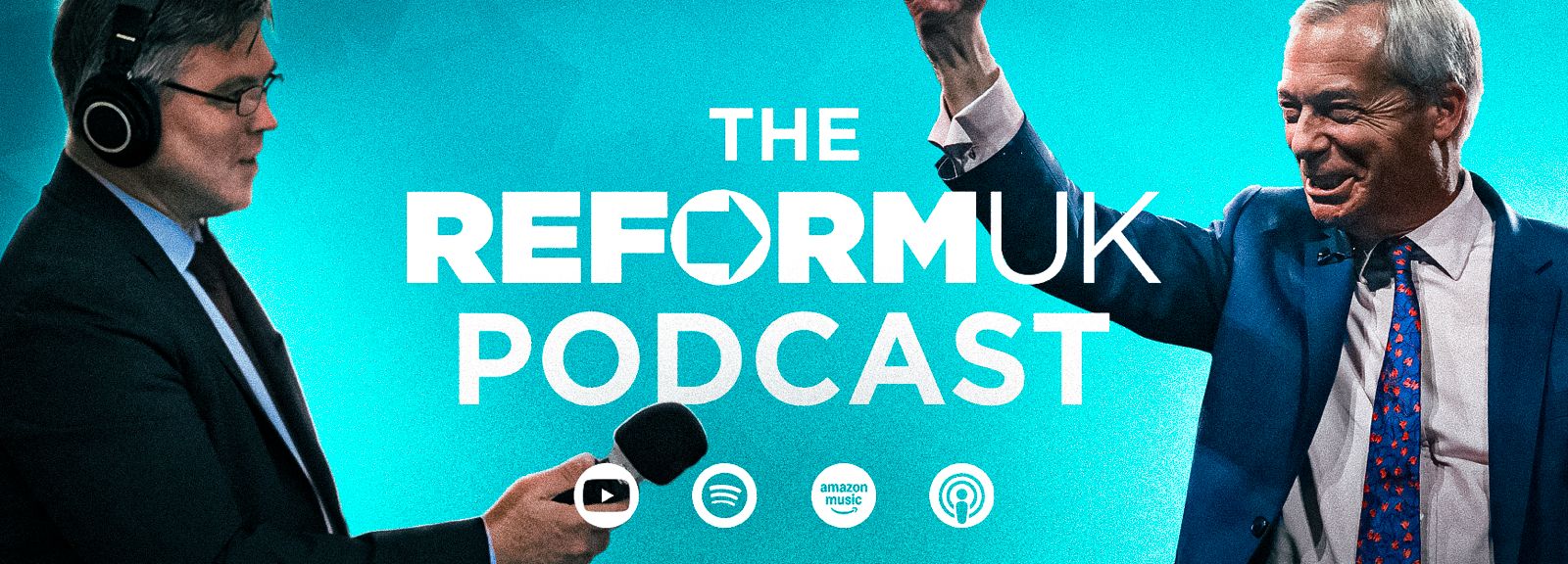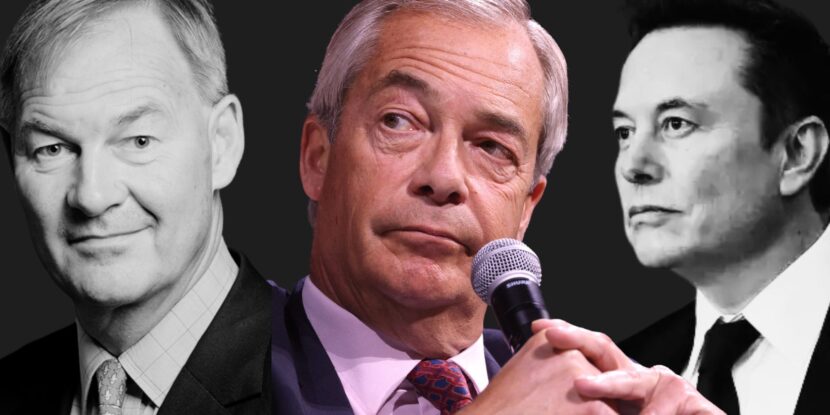



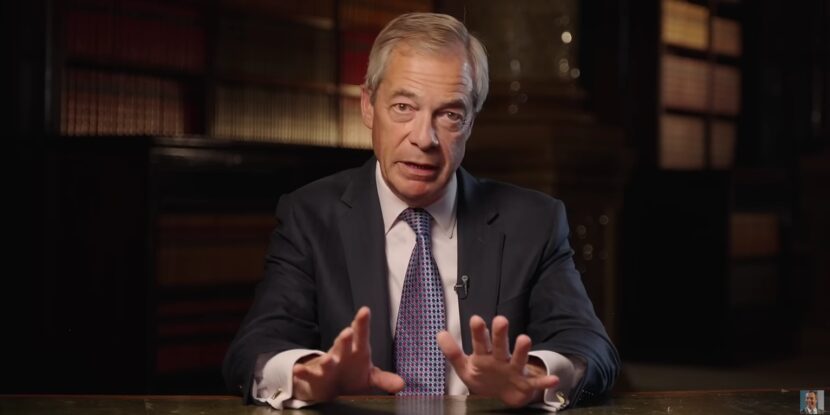

Nigel Farage has announced that his Reform UK party will impose sanctions on Afghanistan, Somalia, Syria, Pakistan, Sudan, and Eritrea if they refuse to accept deportations from a future Reform government. There is a reason he is singling out these six countries in particular.
The National Pulse brings you original reporting and analysis on issues spanning the Atlantic. If you value the work of Raheem J. Kassam and his team, please JOIN THE NATIONAL PULSE or MAKE A DONATION today.
Pakistan.
Back in July, the Islamic Republic of Pakistan refused to take back Shabir Ahmed, the Pakistan-born ringleader of the Rochdale grooming gang, after the British government announced that it would seek his deportation from the country. Ahmed was released from prison earlier this year, having served 14 years of a 22-year sentence for 30 offenses, including rape, aiding and abetting rape, and trafficking for sexual exploitation.
Pakistani officials have blamed Ahmed’s crimes on Britain. “Regardless of where he was born, the onus lies on where he grew up, was raised, groomed, and unfortunately spoiled,” according to Tahir Andrabi, Pakistan’s foreign office spokesman.
The Islamic Republic has consistently refused deportations from the United Kingdom, despite signing a returns and readmissions agreement in August 2022. In January 2025, Pakistan refused to accept a deportation flight from the United Kingdom. In a similar 2020 incident, Pakistan refused to accept another deportation flight.
The Pakistani government has been reluctant to take back Pakistanis who have committed crimes in Britain beyond Shabir Ahmed. In June 2025, Pakistan announced that it would not take back Qari Abdul Rauf and Adil Khan, two other members of the Rochdale grooming gang, after the men tore up their Pakistani passports and claimed that deportation would make them stateless.
Somalia.
The United Kingdom technically already has a returns agreement with Somalia. However, returns of Somali nationals under the agreement remain low. This is even though Somalia remains one of the most common countries of origin of illegal migrants entering Britain.
According to figures from the British Home Office published back in June, approximately 12 percent of illegal migrants arriving by boat originated from Somalia. As such, Reform’s decision to impose sanctions on the country partially relates to ensuring previously established agreements are upheld.
However, the British government requires a UK Letter (UKL) to deport migrants to Somalia, which is issued after pre-verification of the deportee’s identity and nationality by Somali authorities. This creates an additional administrative hurdle and makes returns dependent on Somali authorities completing the necessary verification and documentation process. Therefore, Reform’s threat of sanctions is intended to pressure the Somali authorities to ensure the process is completed.
Eritrea.
Eritreans are the single largest nationality illegally entering the United Kingdom. According to Home Office data for the year ending March 2026, 96 percent of Eritrean nationals arriving in the United Kingdom via illegal routes did so by boat. The number of Eritrean boat arrivals also increased by 62 percent compared to last year.
Eritreans were also among the leading nationalities claiming asylum in Britain in the year ending June 2026. Farage’s focus on Eritrea seems rooted in a desire to target countries whose nationals are most responsible for the illegal migration crisis.
This is particularly important as Eritrea has historically imposed significant obstacles on enforced returns from Britain. For example, according to evidence from the Home Office back in 2015, Eritrean authorities will only consider Emergency Travel Document applications supported by an Eritrean passport, birth certificate, or identification card. This functionally sabotages the returns process as Eritrean migrants typically do not possess these documents. As such, Reform’s policy of suspending the asylum system is a way to lift the obstacles created by the Eritrean bureaucracy.
Reform UK will impose sanctions on countries such as Pakistan, Somalia, Eritrea, Syria, Afghanistan and Sudan if they refuse to accept deportation flights. ✅
— Reform UK (@reformparty_uk) October 12, 2026
To keep reporting at The National Pulse independent, we need your support. Please JOIN THE NATIONAL PULSE or MAKE A DONATION today. We are 100% reader-funded.
Syria.
Similar to Somalia, Syria refuses to accept enforced returns from the United Kingdom. This is particularly important as, while arrivals from Syria have declined in recent years, Britain has a large Syrian population following the 2015-16 migrant crisis.
Following the overthrow of former President of Syria Bashar Al-Assad in 2024, with some substantial assistance from British and other Western governments, London has sought to begin returning Syrian refugees to the country, but without much success. Breaking the recurring trend of Britain granting asylum to large numbers of migrants and then finding itself unable to return them to their countries of origin once circumstances change in those countries serves as a major justification for Reform’s decision to suspend the asylum system.
Since President Ahmed al-Sharaa came to power in Syria in January 2025, the country has pushed to extract funds from the West in exchange for accepting deportations. In a speech earlier this year to Chatham House, a foreign policy think tank in the United Kingdom, President al-Sharaa said: “The return of the refugees is directly linked to the reconstruction of Syria.”
Therefore, Reform’s policy represents an attempt to override the Syrian government’s attempt at extortion, further demonstrating that war-torn countries can use their large refugee diasporas as a form of political leverage, something which Britain’s current asylum system currently fails to take into account.
Afghanistan.
As with Eritrea, Afghanistan has been one of the biggest nationalities for asylum seekers in Britain, and one of the biggest national groups illegally entering the United Kingdom by boat.
According to the Migration Observatory, 99 percent of Afghan asylum applications were granted in 2023 following the Taliban’s return to power in 2021. As a result, Britain now has a large Afghan population, which research has revealed to be disproportionately involved in serious criminal activity.
According to analysis by the Center for Migration Control, a British immigration think-tank, Afghan nationals are 22 times more likely than British nationals to be convicted of a sexual offense, showing that Reform’s policy is aimed at fixing the conditions and threats created by the current asylum system, rather than an attempt to reinforce pre-existing agreements.
Sudan.
Sudan is one of the biggest nationalities to arrive in the United Kingdom by boat. According to the latest Home Office figures, 92 percent of Sudanese asylum claims that received an initial decision were granted protection. The number of Sudanese nationals arriving illegally by boat has also been rising, with government data from the year ending in June 2026 recording an 11 percent increase compared to last year.
Back in June, a Sudanese asylum seeker attempted to behead a local resident in Belfast, the capital of Northern Ireland, sparking widespread protests and a warning from Farage that unrest would continue to grow as long as the British government fails to tackle mass migration.
He had entered the United Kingdom, which is part of the United Kingdom, via the independent Republic of Ireland, suggesting he was “asylum shopping” when he arrived on British soil rather than facing any genuine threat of persecution—a circumstance that applies to most asylum seekers in Britain, who typically travel through multiple safe European countries before they arrive.
The National Pulse helps you understand the latest political news. If you value the work of Raheem J. Kassam and his team, please JOIN THE NATIONAL PULSE or MAKE A DONATION today.
Join Pulse+ to comment below, and receive exclusive e-mail analyses.