


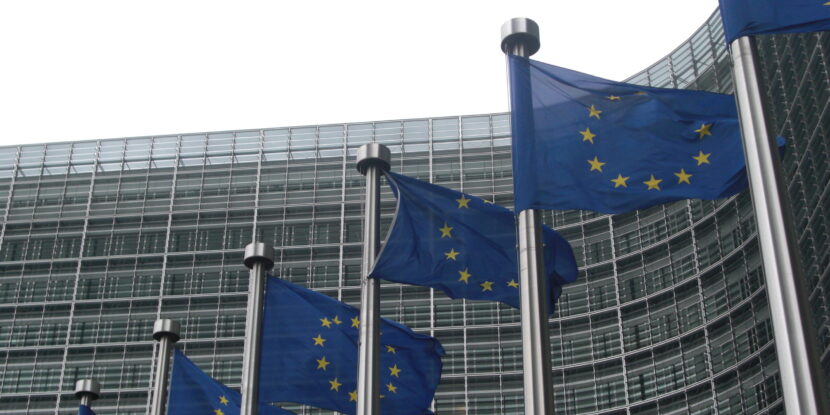

Voters across the European Union face a dense run of national and regional contests over the next twelve months. The results could shift the balance of power within the bloc, with governments less willing to tolerate open border policies, green mandates, and open-ended military support positioned to gain substantial influence. Populist-nationalist and softer center-right parties are entering several of these races with strong polling positions, following years of voter frustration with migration surges, energy costs, and centralized mismanagement by EU officials in Brussels.
The National Pulse brings you the big picture on the elections shaping geopolitics. To help Raheem J. Kassam and his team bring you original reporting and analysis, please JOIN THE NATIONAL PULSE or MAKE A DONATION today.
The Starting Gun.
Bulgaria holds its presidential election on October 25th, 2026. President Iliana Yotova, backed by Prime Minister Rumen Radev’s Progressive Bulgaria movement, leads the field by a wide margin in recent surveys. Radev’s parliamentary victory earlier this year already changed the unsung but regionally influential country’s posture, halting further donations of weapons from Bulgarian army stocks to Ukraine after 13 aid packages on the grounds that the country had reached its limit and the war must be settled by negotiation, not military means alone.
A Yotova victory would lock in that preference for a negotiated settlement over continued arms shipments to Kiev, giving war hawk voices less weight in EU foreign policy.
Spain.
Spain will vote on November 29th, 2026, after Prime Minister Pedro Sánchez called a snap election. Multiple polls put the center-right People’s Party in the low-to-mid 30s and populist-nationalist Vox near 19 percent, enough in most seat projections for the two parties to clear an absolute majority together.
Sánchez’s Socialist Workers’ Party has faced sustained criticism for pushing an amnesty for hundreds of thousands of illegal immigrants, with many more coming forward to be regularized than the government initially projected. The Socialists’ mishandling of subsequent mass migrant crossings into Ceuta, a Spanish city a few miles across from the country’s mainland on the coast of North Africa, has drawn further criticism. Tens of thousands of migrants overwhelmed the Spanish exclave in a short period, reinforcing arguments from the PP and Vox that border control is in a state of collapse.
A PP-Vox government would mark the first national-level inclusion of a major populist-nationalist party in government since Spain’s democratic transition, and would likely tighten migration rules.
France.
The first round of France’s presidential election falls on April 18th, 2027. Marine Le Pen of the National Rally (RN) party leads first-round surveys, often in the mid-30 percent range. A substantial share of voters already rate her as competent for the presidency. In September, National Rally president Jordan Bardella signed a memorandum of understanding with Nigel Farage’s Reform UK party at the latter’s conference. The document commits both sides, if in power, to intercept migrant boats in the English Channel and return their passengers to France pending ultimate repatriation to their countries of origin. It also calls for shared costs and tighter controls on illegal working and welfare access.
A Le Pen presidency would place a longstanding critic of open borders at the head of a founding EU member and radically alter discussions on migration returns and EU integration.
🚨NEW: Nigel Farage and the likely next Prime Minister of France, Jordan Bardella, sign a 'Memorandum of Understanding' which pledges to stop the illegal migrant crossings and includes allowing the UK to tow boats back to France pic.twitter.com/VY1cYv3NkF
— GB Politics (@GBPolitcs) September 4, 2026
The National Pulse is 100% reader-funded. To help us stay RADICALLY INDEPENDENT and bring you the news free of corporate influence, please JOIN THE NATIONAL PULSE or MAKE A DONATION today.
Italy.
Italy must hold parliamentary elections by December 2027. Prime Minister Giorgia Meloni’s Fratelli d’Italia (Brothers of Italy) continues to lead individual-party polls near 27 percent.
Some on the right, including President Trump, have voiced misgivings about the surprisingly slow pace of change under Meloni and her apparent willingness to court the EU establishment since she took office, but her government has begun to record some qualified results in reducing seaborne migration after an initially poor performance. Official figures show sharp drops compared with 2023 levels, with repatriations rising and the ratio of returns to arrivals improving markedly.
Deals with Tunisia and Libya, reinforced border measures, and a potentially trend-setting offshore processing center in Albania have contributed to these results, giving Meloni a record she can point to with her base even as newer populist formations test her right flank.
Poland.
Poland’s parliamentary election is due by autumn 2027. Prime Minister Donald Tusk’s Civic Coalition leads individual polls, yet the combined strength of the formerly governing Law and Justice party (PiS), the populist-nationalist Konfederacja (Confederation), and related national-conservative lists remains substantial enough that cooperation among them could produce a right-leaning coalition government in several projections.
Importantly, the right already holds the Polish presidency. In June 2025, Karol Nawrocki, the nationalist candidate backed by Law and Justice, narrowly defeated liberal Warsaw mayor Rafał Trzaskowski. Nawrocki campaigned on sovereignty, opposition to elements of the green agenda, and limits on further EU integration. While he lacks the powers of an American or French president, with the government reporting largely to Prime Minister Tusk, his victory has already constrained the Tusk government’s room to maneuver, given his ability to veto liberal legislation. A stronger parliamentary result for the right in 2027 would likely orient the country further away from permissive immigration policies, climate politics, and a relaxed attitude towards migration.
Other Countries to Watch.
Germany holds multiple state elections in 2027. The eurosceptic, anti-mass migration Alternative for Germany (AfD) party leads national polls in the high 20s and has recently posted decisive results in eastern states, including winning nearly 44 percent in Saxony-Anhalt. Germany’s establishment parties have responded by renewing discussion on potentially banning the populist party.
Estonia votes on March 7th, 2027. The national-conservative Isamaa has frequently led or placed near the top. Finland’s election on April 18th sees the populist Finns Party competitive within the governing center-right coalition, although the Social Democrats lead some surveys. Greece is expected to vote by late July, where Kyriakos Mitsotakis’s center-right New Democracy holds a clear lead.
Slovakia’s contest, due by late September, pits Robert Fico’s Smer-SD against progressive opponents in a close race. Fico has questioned the automatic invocation of NATO’s Article 5, resumed military attaché contacts with Russia, and opposed EU financial packages for Kiev that he argues will prolong the war in Ukraine, instead pushing for negotiations. A Fico victory would strengthen voices favoring diplomatic off-ramps with Russia over prolonged military escalation.
Taken together, the raft of upcoming European elections gives populist-nationalists and softer conservatives who are increasingly open to cooperating with them many openings to expand their influence. Where they succeed, national governments are likely to prioritize border security, energy realism, and de-escalation with Russia. In particular, their cumulative effect could produce a European Union more attentive to public majorities that have already registered preferences for tighter immigration controls in recent national votes.
The National Pulse is funded by readers like you. To support Raheem J. Kassam and his team, please JOIN THE NATIONAL PULSE or MAKE A DONATION today.
Join Pulse+ to comment below, and receive exclusive e-mail analyses.